

GIỐNG SẮN VIỆT NAM PHÁT TRIỂN QUA 50 NĂM (1975-2024)
Vietnamese cassava varieties progression across 50 years
Hoàng Long1, Nguyễn Thị Trúc Mai2, Nguyễn Nữ Quỳnh Đoan3,
Hoàng Kim4 , Clair Hershey5 & Reinhardt Howeler5
Tóm tắt
Từ khóa: giống sắn, DUS và VCU, tiến bộ, Việt Nam

BẢO TỒN VÀ PHÁT TRIỂN SẮN
Sán Việt Nam ngày nay. Giống sắn
Việt Nam phát triển qua 50 năm. Vietnamese cassava today Vietnamese
cassava varieties progression across 50 years; see more
see more https://vietnamscience.vjst.vn/index.php/vjste/article/view/1186 & https://vietnamscience.vjst.vn/index.php/vjste/article/view/1186/441 & https://cnm365.wordpress.com/category/chao-ngay-moi-19-thang-3/
- Long Hoang*
- Mai T.T. Nguyen
- Doan. N.Q. Nguyen
- Kim Hoang
- Clair Hershey
- Reinhardt Howeler
Abstract
Vietnamese cassava varieties constitute the fundamental and pivotal element in the sustainable development programme for cassava. This article aims to encapsulate the advancements made over nearly five decades in breeding and enhancing Vietnamese cassava varieties. It delineates the suitable cassava variety structures for each period and ecological region. The selection of cassava varieties exhibiting high starch yield and disease resistance, coupled with the establishment of a suitable and efficient cassava cultivation model, exemplified by 10T for Vietnamese cassava varieties KM568, KM539, KM537, KM569, and KM94, stands as a cornerstone for sustaining cassava development over the years. Presently, we advocate for farmers to cultivate promising cassava varieties such as KM568 or KM539 (an enhanced version of the International Center for Tropical Agriculture (CIAT) cassava variety C39, refined through multiple breeding cycles from 2004 onwards), KM537, KM569, or HN1 (originally known as TMEB419), alongside popular cassava varieties: KM440, KM419, KM94, KM7, STB1, KM414, KM98-7, KM140, KM98-5, KM98-1. We have conducted Distinctness, Uniformity, and Stability (DUS) and Value for Cultivation and Use (VCU) tests, showcasing outstanding cassava varieties in large-scale farming, thereby providing compelling evidence for the prudent conservation and sustainable development of cassava. Vietnamese cassava progression (1975 to date) has traversed six stages, with five waves of restructuring cassava varieties, aligning with target orientations, farming conditions, and market demands, culminating in 16 popular cassava varieties and four promising cassava varieties KM568, KM539, KM537, and KM569.
Keywords:
Cassava varieties, Distinctness, Uniformity, and Stability (DUS) and Value for Cultivation and Use (VCU), progression, Vietnam
DOI:
https://doi.org/10.31276/VJSTE.66(1).59-76
Classification number
3.1
Author Biographies
Long Hoang
Faculty of Agronomy, Nong Lam University – Ho Chi Minh City, Quarter 6, Linh Trung Ward, Thu Duc City, Ho Chi Minh City, Vietnam
Mai T.T. Nguyen
Department of Agriculture and Rural Development of Phu Yen Province, 64 Le Duan Street, Tuy Hoa City, Phu Yen Province, Vietnam
Doan. N.Q. Nguyen
Faculty of Economics, Phu Yen University, 18 Tran Phu Street, Ward 7, Tuy Hoa City, Phu Yen Province, Vietnam
Kim Hoang
Faculty of Agronomy, Nong Lam University – Ho Chi Minh City, Quarter 6, Linh Trung Ward, Thu Duc City, Ho Chi Minh City, Vietnam
Vietnam National Cassava Program (VNCP), 121 Nguyen Binh Khiem Street, Dakao Ward, District 1, Ho Chi Minh City, Vietnam
Clair Hershey
International Center for Tropical Agriculture (CIAT), Kilometro 17, Straight Cali – Palmira, Apartado Aéreo 6713, Cali, Colombia
Reinhardt Howeler
International Center for Tropical Agriculture (CIAT), Kilometro 17, Straight Cali – Palmira, Apartado Aéreo 6713, Cali, Colombia

Downloads
Published
2024-03-15
Received 22 October 2023; revised 20 November 2023; accepted 15 February 2024
How to Cite
Long Hoang, Mai T.T. Nguyen, Doan. N.Q. Nguyen, Kim Hoang, Clair Hershey, & Reinhardt Howeler. (2024). Vietnamese cassava varieties progression across 50 years. Vietnam Journal of Science, Technology and Engineering, 66(1), 59-76. https://doi.org/10.31276/VJSTE.66(1).59-76
Issue
Section
Life Sciences
License

This work is licensed under a Attribution-NonCommercial-NoDerivatives 4.0 International
Vietnamese cassava varieties progression across 50 years
Giống sắn Việt Nam phát triển qua 50 năm
SẮN VIỆT NAM BẢO TỒN VÀ PHÁT TRIỂN BỀN VỮNG
Vietnamese cassava varieties progression across 50 years. Greeting
from Hoang Kim Vietnam to Reinhardt Howeler and my teachers and
friends. Best wish to you and your family on New Days; Good friends are
hard to find, harder to leave, and impossible to forget, see moresee
more https://vietnamscience.vjst.vn/index.php/vjste/article/view/1186 & https://vietnamscience.vjst.vn/index.php/vjste/article/view/1186/441 and https://hoangkimlong.wordpress.com/category/vietnamese-cassava-today — with Hoang Long, Nguyen Thi Truc Mai, Nguyen Nu Quynh Doan, Clair Hershey, and Reinhardt Howeler.
Welcome to read ….

Article Sidebar
Trích dẫn
Nguyễn, M. T. T., Hoàng, L., Nguyễn, Đoan N. Q., & Hoàng, K. (2024). Kết quả chọn tạo và khảo nghiệm các giống sắn triển vọng KM568, KM539, KM537 tại tỉnh Phú Yên. Tạp Chí Nông nghiệp Và Phát triển 23 (1), 1-13.
Số tạp chí
Chuyên mục
Nông học, Lâm Nghiệp
Main Article Content
Tóm tắt
Nghiên cứu chọn tạo giống sắn năng suất tinh bột cao, kháng được sâu bệnh chính, phù hợp với điều kiện sản xuất của tỉnh Phú Yên là quan trọng và cấp bách. Mục tiêu nhằm chọn tạo được giống sắn có năng suất tinh bột cao (vượt hơn đối chứng KM419 và KM94 tối thiểu 10%), kháng được sâu bệnh chính, điểm bệnh cấp 1 – 2 đối với bệnh khảm lá (CMD) và bệnh chồi rồng (CWBD). Phương pháp nghiên cứu thực hiện theo chuẩn của Chương trình sắn Việt Nam và Trung tâm Nông nghiệp Nhiệt đới quốc tế (CIAT) về quy trình công nghệ chọn tạo và nhân giống sắn lai. Kết quả đã tuyển chọn được ba giống sắn triển vọng KM568, KM539 và KM537. Giống sắn KM568 con lai của KM440 x (KM419 x KM539), có năng suất củ tươi 54 tấn/ha với hàm lượng tinh bột 28,4% lúc 10 tháng sau trồng. Giống sắn KM539 là C39* chọn lọc của C39 nhập nội từ CIAT và có năng suất củ tươi 45,9 tấn/ha với hàm lượng tinh bột 27,9%. Giống sắn KM537 là con lai của (KM419 x KM539) x KM440, có năng suất củ tươi 51,3 tấn/ha với hàm lượng tinh bột 28,5%. Cả 3 giống này đều kháng bệnh CMD cấp 1,5 và kháng bệnh CWBD cấp 1. KM568, KM539 và KM537 lần lượt có 8 – 14 củ/bụi, 7 – 12 củ/bụi và 7 – 12 củ/bụi. Tất cả các giống này đều đạt kiểu hình cây lý tưởng, thịt củ trắng, cây thẳng, tán gọn, lóng ngắn và ít phân cành. Ngoài ra, chiều cao cây của KM568, KM539 và KM537 lần lượt là 2,3 – 2,7 m, 2,7 – 3,0 m và 2,5 – 2,9 m.
Từ khóa: DUS và VCU, Giống sắn, KM568, KM539, KM537
Article Details
Tài liệu tham khảo
FAO (Food and Agriculture Organization of the United Nations). (2022). FAOSTAT. Rome, Italy: FAO.
Hoang, K. (2003). Technology of cassava breeding. In Ngo, D. T., & Le, Q. H. (Eds.). Varietal technology of plant, animal and forestry (Vol. 2, 95-108). Ha Noi, Vietnam: Agricultural Publishing House.
Hoang, K., Nguyen, B. V., Hoang, L., Nguyen, H. T., Ceballos, H., & Howeler, R. H. (2010). Current situation of cassava in Vietnam. In Howeler, R. H. (Ed.), Proceedings of The 8th Regional Workshop on A New Future for Cassava in Asia: Its Use as Food, Feed, and Fuel to Benefit The Poor (100-112). Vientiane, Lao PDR: International Center for Tropical Agriculture (CIAT) and the National Agriculture and Forestry Research Institute (NAFRI). Retrieved February 15, 2022, from http://ciat-library.ciat.cgiar.org/Articulos_Ciat/biblioteca/A_new_future_for_Cassava_in_Asia_Its_use_a_food_freed_and_fuel_to_benefit_the_poor-compressed.pdf.
Hoang, K., Nguyen, M. T. T., Nguyen, M. B., & Howeler, R. H. (2011). Cassava conservation and sustainable development in Vietnam. In Howeler, R. H. (Ed.), Proceedings of The 9th Regional Workshop on Sustainable Cassava Production in Asia for Multiple Uses and for Multiple Markets (35-56). Guangxi, China: International Center for Tropical Agriculture (CIAT) and the Chinese Cassava Agrotechnology Research System (CCARS). Retrieved April 20, 2022, from http://ciatlibrary.ciat.cgiar.org/Articulos_Ciat/biblioteca/Sustainable_cassava_production_in_Asia_for_multiple_uses_and_for_multiple_markets.pdf
Hoang, L., Nguyen, M. T. T., Nguyen, M. B., Hoang, K., Ishitani, M., & Howeler, R. H. (2014). Cassava in Vietnam: production and research; an overview. In Howeler, R. H. (Ed.), Proceedings of Asia Cassava Research Workshop (15). Ha Noi, Vietnam: ILCMB- CIAT-VAAS/AGI.
Howeler, R. H. (2011). Proceedings of the 9th regional workshop on sustainable cassava production in Asia for multiple uses and for multiple markets. Retrieved April 20, 2022, from http://ciatlibrary.ciat.cgiar.org/Articulos_Ciat/biblioteca/Sustainable_cassava_production_in_Asia_for_multiple_uses_and_for_multiple_markets.pdf
Howeler, R. H., & Aye, T. M. (2014). Sustainable management of cassava in Asia – From research to practice. Ha Noi, Vietnam: News Publishing House.
MARD (Ministry of Agriculture and Rural Development). (2022). Report on production situation and directing the prevention of harmful organisms on cassava. Gia Lai, Vietnam: MARD and People’s Committee of Gia Lai Province.
Nguyen, M. B. (2018). Research on cultural techniques to scatter harvest season for cassava in Dak Lak province (Unpublished doctoral dissertation). Tay Nguyen University, Dak Lak, Vietnam.
Nguyen, M. T. T. (2017). Study on the selection of high yielding cassava varieties and intensive cultivation techniques in Phu Yen province (Unpublished doctoral dissertation). University of Agriculture and Forestry, Hue University, Hue, Vietnam.
Nguyen, M. T. T., Hoang, L., Nguyen, D. N. Q., & Hoang, K. (2021). Phu Yen cassava solutions for sustainable development. Phu Yen, Vietnam: Phu Yen Provincial People’s Committee.
Nguyen, V. A., Le, T. N., Nguyen, H., Do, T. T., Nguyen, H. T., Pham, H. T. T., Nguyen, H. T., Seki, M., & Le, H. H. (2021). Characterization of some popular cassava varieties in Vietnam. Journal of Vietnam Agricultural Science and Technology 3(124), 1-17.
Tran, Q. N., Hoang, K., Vo, T. V., & Kawano, K. (1995). Selection results of the new cassava varieties KM60, KM94, KM95 and SM937-26. In Proceedings of Vietnam Agricultural Research Workshop. Lam Dong, Vietnam: Ministry of Agriculture and Rural Development.
VNA (Vietnam National Assembly). (2018). Law No. 31/2018/QH14 dated on November 19, 2018. Law on crop production. Retrieved May 24, 2022, from https://thuvienphapluat.vn/van-ban/Linh-vuc-khac/Luat-Trong-trot-2018-336355.aspx.
VNFU (Central Vietnam Farmer’s Union). (2021). New rural magazine – Farmer’s scientist links take off together. Ho Chi Minh City, Vietnam: Youth Publishing House.

CÂY LƯƠNG THỰC VIỆT NAM
#cltvn #Vietcassava tích hợp thông tin Phú Yên Online I Kết quả bước đầu trong chọn tạo giống sắn kháng bệnh xem tiếp tin và ảnh tại https://baophuyen.vn/79/310545/ket-qua-buoc-dau-trong-chon-tao-giong-san-moi-khang-benh.html
Đề tài khoa học, công nghệ cấp tỉnh “Nghiên cứu chọn tạo giống sắn năng suất tinh bột cao, kháng được sâu bệnh hại chính, phù hợp với điều kiện sản xuất tại tỉnh Phú Yên” đang nhận được sự quan tâm của ngành Nông nghiệp, hộ dân trồng sắn và mở ra nhiều triển vọng cho cây sắn Phú Yên.
Đài Truyền Hình Phú Yên Khoa học và Cuộc sống tháng 11/2023 “Nghiên cứu chọn tạo giống sắn năng suất tinh bột cao, kháng được sâu bệnh hại chính, phù hợp với điều kiện sản xuất tại tỉnh Phú Yên” https://youtu.be/gZZk9OL_4fg

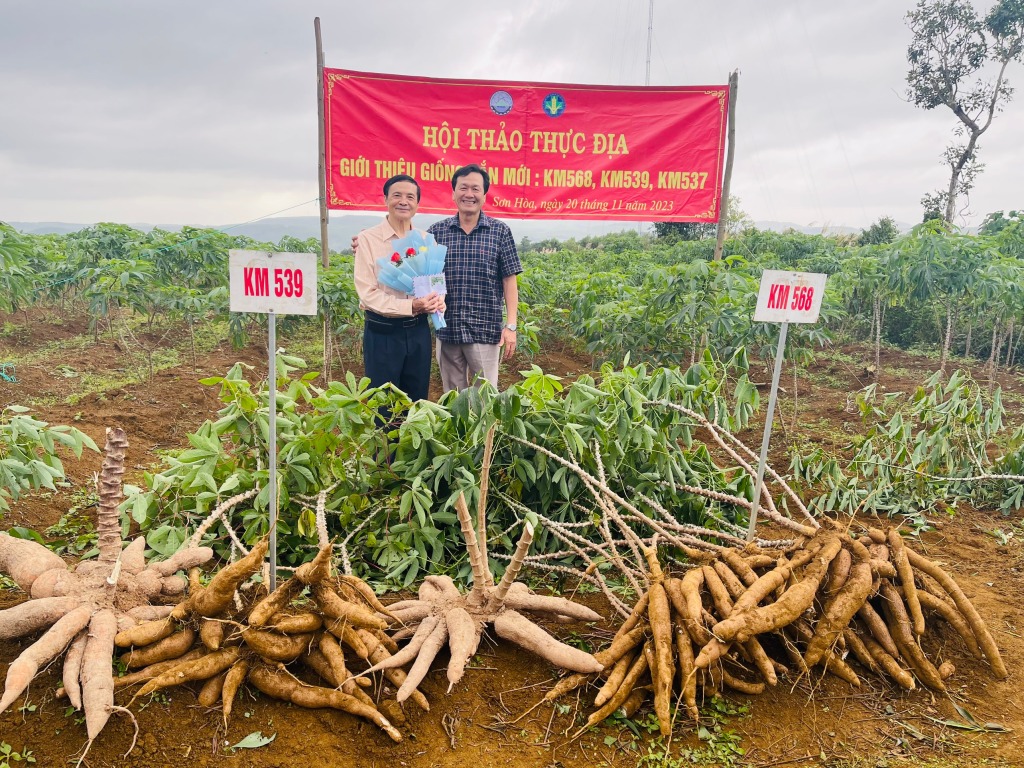
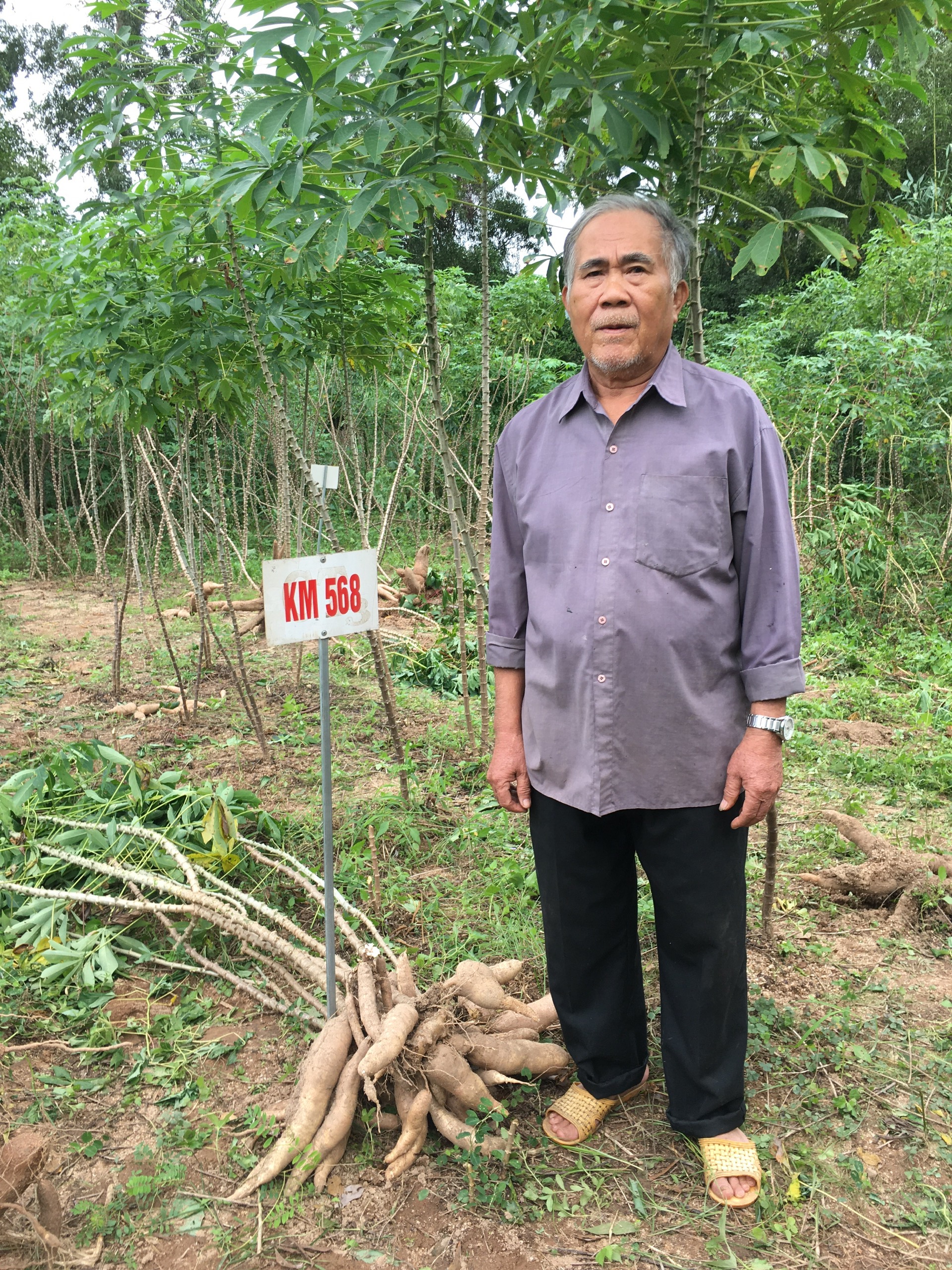
#Vietcassava Phu Yen 18 11 2023
KM568 năng suất tinh bột cao kháng cao CMD CWBD cây và củ kiểu hình lý tưởng

KM569 ăn ngon ruột vàng kháng khá CMD CWBD với KM568 năng suất tinh bột cao kháng cao CMD CWBD củ và cây chuẩn được lão Nông chấp nhận tuyển chọn

KM539 năng suất bột cao kháng cao CMD CWBD tuyển chọn dạng cây thấp ít phân nhánh

Cụ Bình với KM539-10 Đồng Xuân

Giống sắn HN1 năng suất tinh bột cao, kháng cao CMD CWBD nhưng nhược điểm cao cây dễ đổ ngã
Older information
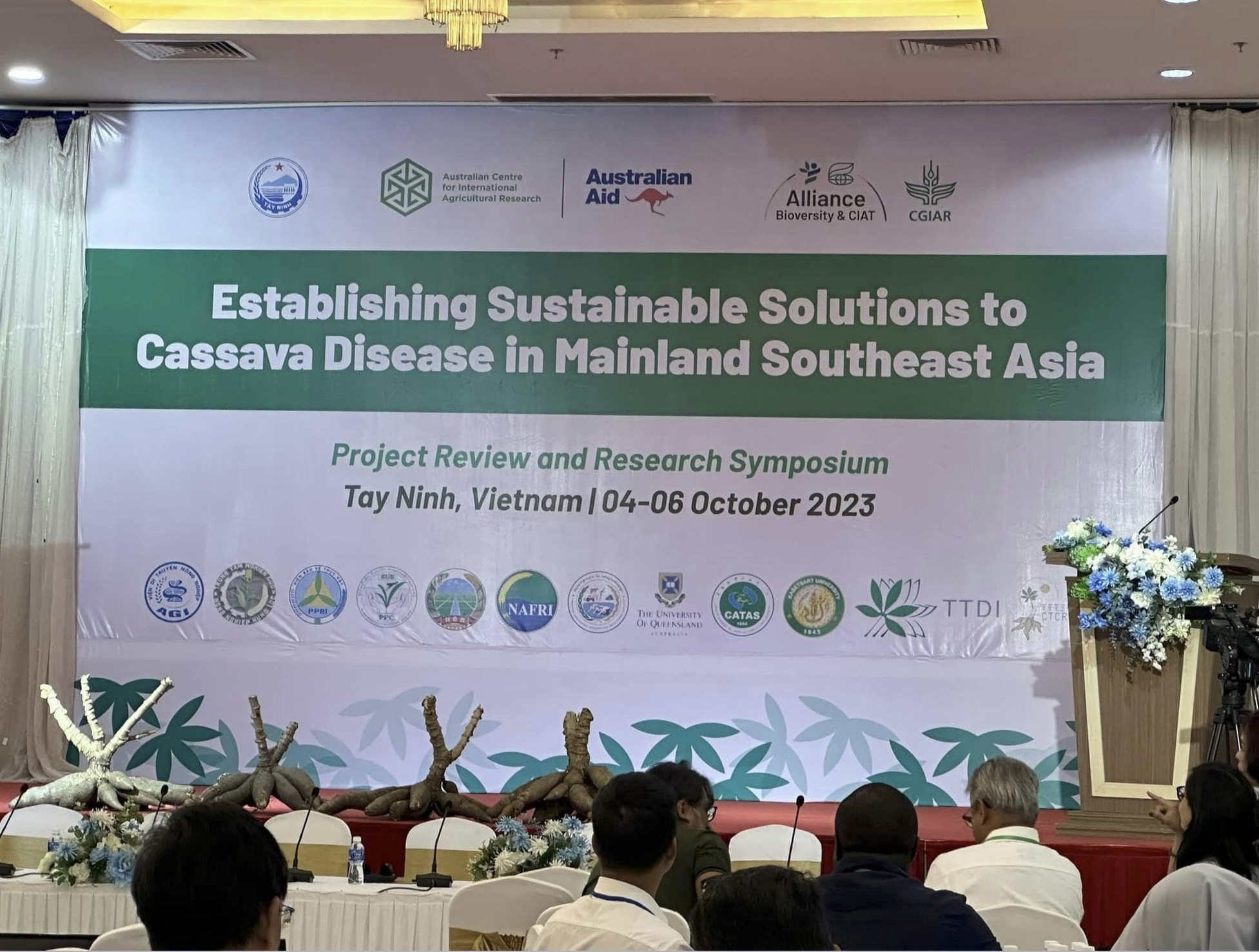
Tay Ninh Cassava Workshop 04-06 October 2023 Establishing Sustainable Solution to Cassava Disease in Mainland Southeast Asia. Project Review and Research Symposium, see more Vietnamese cassava today https://hoangkimlong.wordpress.com/category/vietnamese-cassava-today/


Dự án thiết lập các giải pháp bền vững xử lý sâu bệnh hại khoai mì khu vực Đông Nam Á:
Chọn tạo được 6 giống mì kháng bệnh khảm lá Cập nhật ngày: 05/10/2023 – 08:38
BTNO – Sáng 4.10, UBND tỉnh Tây Ninh tổ chức hội nghị tổng kết Dự án
thiết lập các giải pháp bền vững xử lý sâu bệnh hại khoai mì (sắn) khu
vực Đông Nam Á.
(Nguồn: Báo Tây Ninh: https://baotayninh.vn/chon-tao-duoc-6-giong-mi-khang-benh-kham-la-a164224.html) tích hợp thông tin tại Vietnamese cassava today https://hoangkimlong.wordpress.com/category/vietnamese-cassava-today/
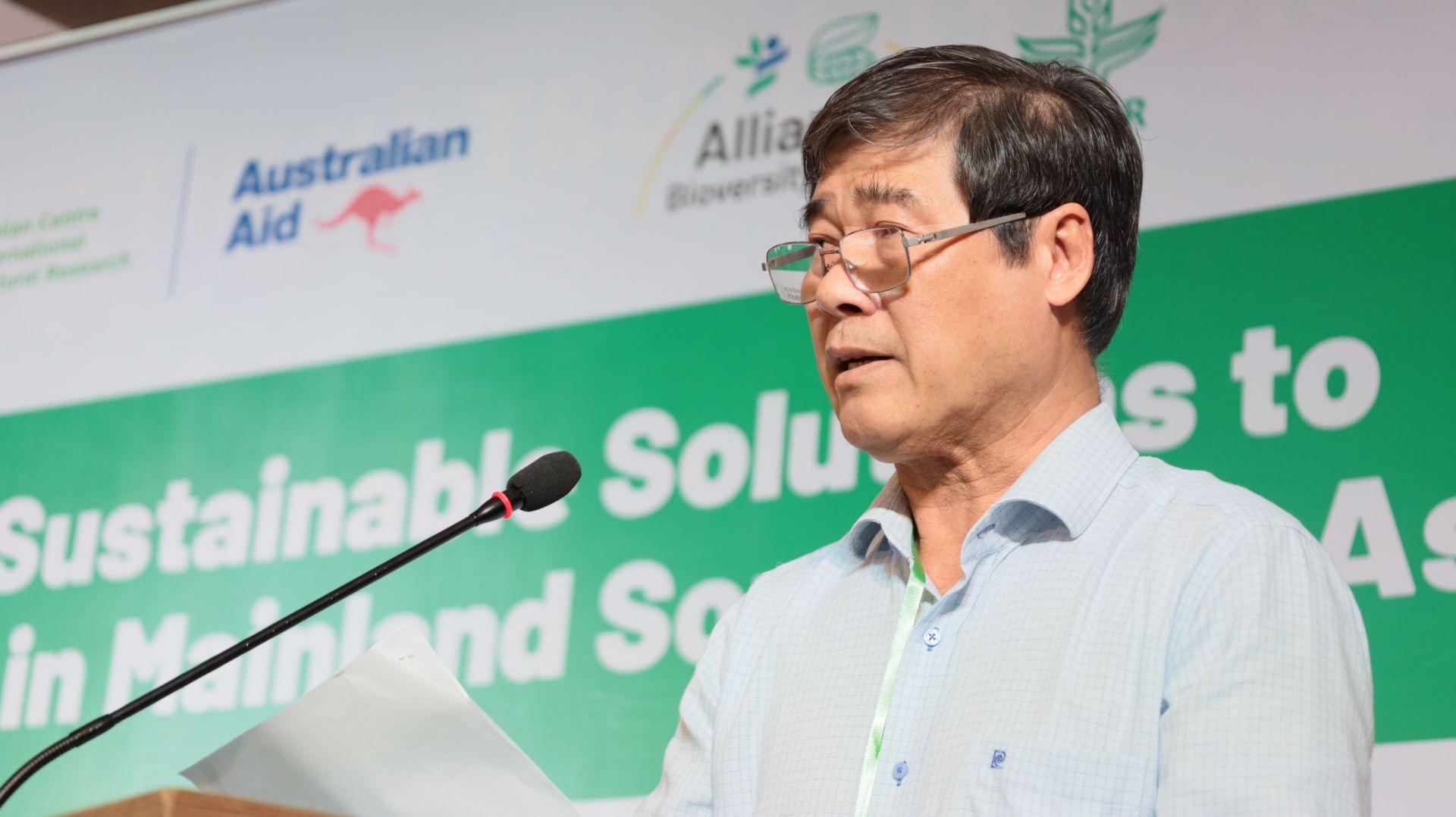
Ông Trần Văn Chiến – Phó Chủ tịch UBND tỉnh phát biểu tại hội nghị.
Dự hội nghị có ông Lê Văn Thiệt- Phó Cục trưởng Cục Bảo vệ thực vật; ông Trịnh Xuân Hoạt- Phó Viện trưởng Viện Di truyền thuộc Bộ Nông nghiệp và Phát triển nông thôn (NN&PTNT); đại diện Trung tâm Nghiên cứu Nông nghiệp quốc tế Úc (ACIAR), đơn vị tài trợ dự án; Trung tâm Nông nghiệp Nhiệt đới Quốc tế (CIAT), chuyên gia nông nghiệp các nước Campuchia, Lào, Indonesia, Philippines, và một quốc gia châu Phi.
Về phía Tây Ninh có ông Trần Văn Chiến- Phó Chủ tịch UBND tỉnh; ông Nguyễn Đình Xuân – Giám đốc Sở NN&PTNT và nông dân trồng mì trên địa bàn tỉnh.
Phát biểu tại hội nghị, Phó Chủ tịch UBND tỉnh Trần Văn Chiến cho biết, dự án Thiết lập các giải pháp xử lý bệnh hại trên cây mì tại các nước khu vực Đông Nam Á do ACIAR tài trợ, thực hiện trong giai đoạn 2019 – 2023, có sự tham gia của Trung tâm Nghiên cứu thực nghiệm nông nghiệp Hưng Lộc, Viện Di truyền nông nghiệp, Viện Bảo vệ thực vật và Sở NN&PTNT Tây Ninh. Dự án nghiên cứu, khảo nghiệm và đánh giá một số giống mì tiềm năng có khả năng kháng bệnh phù hợp với điều kiện tự nhiên của khu vực Đông Nam bộ. Kết quả bước đầu của dự án chọn tạo được 6 giống mì kháng bệnh khảm lá, gồm: HN1, HN3, HN5, HN36, HN80, HN97.
Ông Trần Văn Chiến hy vọng trong thời gian tới, Trung tâm ACIAR và CIAT sẽ tiếp tục hỗ trợ nghiên cứu và phát triển lĩnh vực nông nghiệp nông thôn trên địa bàn tỉnh; đồng thời, phối hợp triển khai có hiệu quả trong lĩnh vực nghiên cứu, lai tạo, trồng khảo nghiệm và sản xuất các giống mì mới sạch bệnh cho năng suất, hàm lượng tinh bột cao, có khả năng thích ứng tốt với điều kiện canh tác tại Tây Ninh.

Ông Jonathan Newby – Giám đốc Chương trình sắn Quốc tế, Trung tâm Nông nghiệp Nhiệt đới Quốc tế (CIAT) trao đổi với ông Bùi Công Ngọc-(người được chuyển giao thí điểm nhân giống mì kháng khảm).
Ông Nguyễn Đình Xuân – Giám đốc Sở NN&PTNT Tây Ninh cho biết, diện tích trồng mì hàng năm của tỉnh khoảng 60.000 ha, tập trung tại các huyện Tân Châu, Tân Biên, Châu Thành và Dương Minh Châu. Năng suất trung bình từ 33 – 35 tấn/ha (cao gấp 1,7 lần năng suất trung bình của cả nước), chiếm 10% diện tích và 20% tổng sản lượng, đóng góp 50% vào tổng thu nhập quốc gia.
Theo ông Xuân, bệnh khảm lá đã ảnh hưởng đáng kể đến năng suất tinh bột mì, từ 30% -70%. Do đó, việc triển khai dự án thiết lập các giải pháp bền vững xử lý sâu bệnh hại mì khu vực Đông Nam Á giúp tìm ra được nhiều giống mới, kháng được bệnh, năng suất cao hơn đáng kể so với các giống được trồng phổ biến trước đây.
Ông Jonathan Newby- Giám đốc Chương trình sắn quốc tế, Trung tâm CIAT cho biết, kết quả dự án cho thấy việc trồng trọt bằng nguồn giống sạch sẽ cho năng suất củ tươi và hàm lượng tinh bột cao hơn đáng kể đối với tất cả các giống được thử nghiệm. “Chúng tôi đang trong giai đoạn đàm phán cuối cùng để thành lập Trung tâm Nghiên cứu sắn ở tỉnh Tây Ninh, có sự tham gia của nhà nước, doanh nghiệp và các nhà đầu tư nghiên cứu”- ông Jonathan Newby nói thêm.
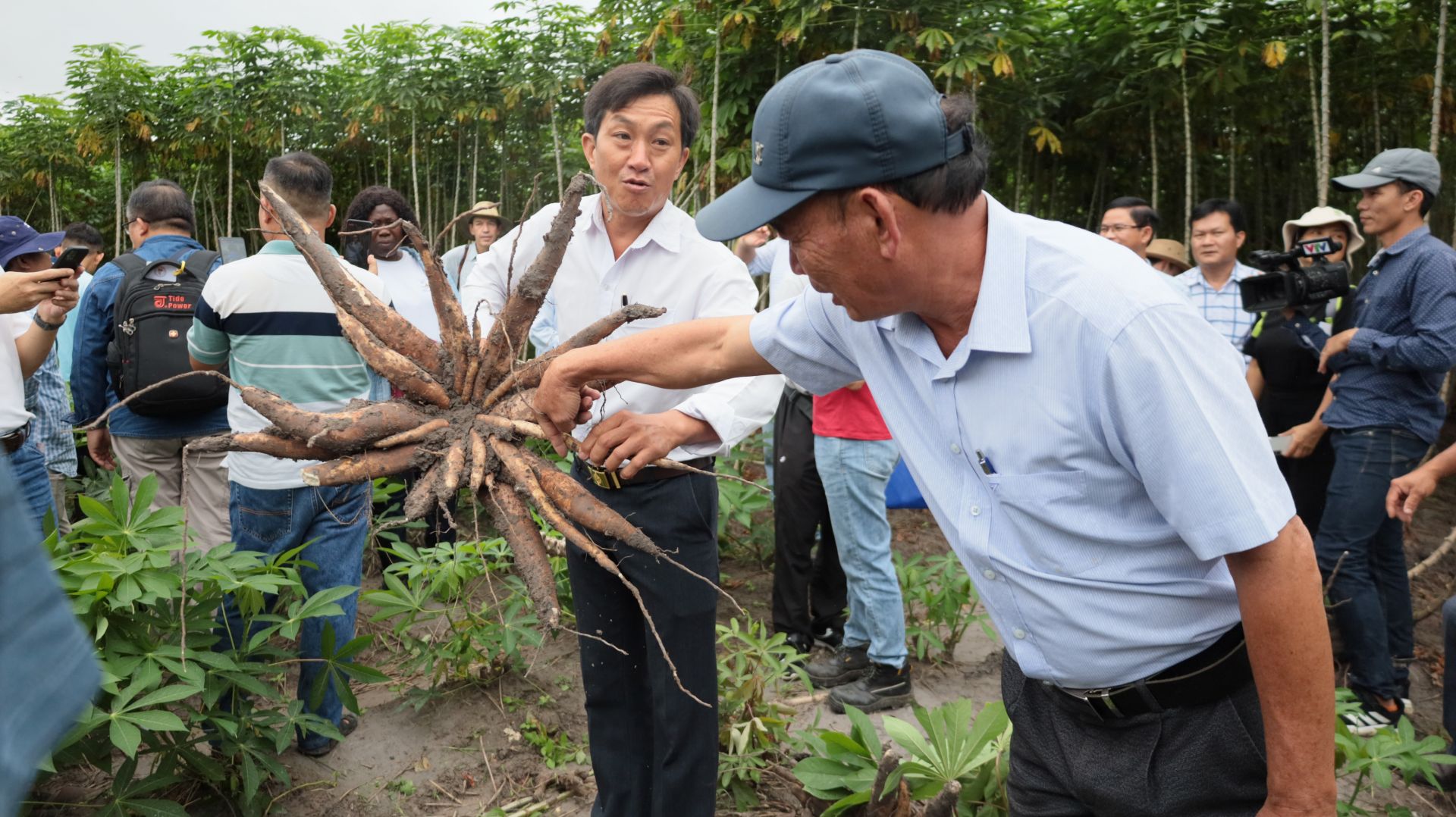
Nông dân tham gia khảo sát bất ngờ về bộ củ của cây mì HN1.
Tại hội nghị, UBND tỉnh ký kết biên bản thoả thuận hợp tác với Trung tâm Nông nghiệp Nhiệt đới Quốc tế (CIAT) giai đoạn 2024 – 2028. Theo đó, hai bên thống nhất thành lập một ban điều hành bao gồm các thành viên của CIAT, UBND tỉnh Tây Ninh, đại diện của các doanh nghiệp nhằm hỗ trợ và điều phối các hoạt động nghiên cứu tại địa phương trong giai đoạn 2024-2028.
Minh Dương
Báo DÂN VIỆT 4.10 2023 . Tính đến tháng 12/2022, diện tích trồng sắn sử dụng các giống kháng bệnh khảm lá còn trên đồng là 117,5 ha; gồm các giống HN3, HN5, HN1, HN 80, HN 97. Trong đó, giống HN5 có diện tích nhiều nhất, 70ha. Trong năm 2023, giống sắn kháng khảm HN36 được phép lưu hành, nâng tổng số lượng giống kháng khảm được phép lưu hành tại vùng Đông Nam Bộ lên 6 giống: HN1, HN3, HN5, HN36, HN80, HN97.
Thành lập Trung tâm Nghiên cứu sắn ở Tây Ninh
Ngành nông nghiệp khuyến khích, hỗ trợ kỹ thuật cho người dân tham gia cùng sản xuất, tăng khả năng cung cấp giống kháng khảm cho khoảng 2.000ha trên địa bàn tỉnh “Tính theo cấp số nhân gấp 10 lần (1 cây sắn giống có thể cho ra 10 hom giống – PV), diện tích giống sắn kháng bệnh khảm có thể tăng lên 10.000ha, thậm chí cao hơn vào niên vụ 2023 – 2024”, ông Xuân cho biết.
Sustainable cassava disease solutions in Southeast Asia
Enhancing smallholder livelihoods and economic development
- Home
- About
- Markets & Policy
- Screening & Breeding
- Surveillance & Diagnostics
- Seed Systems & Agronomy
- Preliminary research project
- Publications
- Extension material
- Links
- Blogs
- Events
- MTR
- Research Symposium and Review
- Media
Meeting Program (Draft)
Sunrise Hotel
81 Hoang Le Kha Street, Ward 3, Tay Ninh City, Tay Ninh Province, Vietnam
Day 1 – Wednesday 4th October
| 8:00am | Registration | Sunrise Hotel | Presentation | Video |
| 8:30 AM | Welcome to Tay Ninh and Vietnam Importance of cassava in Vietnam and Tay Ninh | Mr Tran Van Chien, Vice Chaiman of Provincial People’s Committee Mr Nguyen Dinh Xuan, Director of DARD Tay Ninh Le Van Thiet, Deputy Director of Plant Protection Division | ||
| 9:00:9:20 | Introduction to ACIAR and the review team | Dr Eric Huttner (ACIAR) | ||
| Session 1: Assess the opportunities, challenges, and risks for the development of sustainable regional solutions for cassava disease management in mainland SEA | ||||
| 9:20-10:00 | “Establishing sustainable solutions to cassava disease in Mainland Southeast Asia” : market context, evolution, & achievements | Dr Jonathan Newby (CIAT) | Overview Market context | |
| 10:00-10:30 | Coffee | |||
| 10:30-11:00 | Experimental field-level impacts of CMD and CWBD: Developing short-term recommendations for farmers based on best-bet information | Dr Imran Malik (CIAT) Mr Sok Sophearith (CIAT) | Presentation Presentation | Youtube Youtube |
| 11:00-11:30 | Panel: Impact of cassava disease – across scales (farmers, traders, industry, national government) | Panel 1 Jonathan Newby (facilitator) El Chhinh – Farmer leader Mr Attapol Lerdvanichdilok (TTSA) Nguyen Huu Hung (Vince Chairman VICAAS) Dr Phetmanyseng (NAFRI) | Discussion Padlet | |
| 11:30-12:00 | Addressing sustainability: Lessons learnt in coordination and communication between stakeholders and projects | Mr Xuan (DARD Tay Ninh) Mr Run Sophannara (PDAFF Banteay Meanchey) Dr Chanthakhone Boualaphanh (NAFRI) Boonmee Wattanaruangrong (TTDI) | Discussion Padlet | |
| 12:00-1:00 | Lunch | |||
| Session 2: Enhanced regional diagnostic protocols, tools and information platforms fit for purpose Discussion Padlet | ||||
| 1:00-1:20 | Overview of activities, outputs & outcomes (20mins) | Dr Wilmer Cuellar (CIAT) | Presentation | |
| 1:20-1:35 | Laos report (15mins) | Ms Pinkham Vongphachanh (PPC) | Presentation | Youtube |
| 1:35-1:50 | Cambodia report (15mins) | Mr Oeurn Samoul (GDA) | Presentation | Youtube |
| 1:50-2:05 | Vietnam report (15mins) | Ms Le Thi Hang (PPRI) | Presentation | |
| 2:05-2:20 | Thailand report (15mins) | Dr Wanwisa Siriwan (KU) | Presentation | |
| 2:20-2:35 | Whitefly surveillance and bio-typing: implications for spread of CMV and other WF transmitted diseases (15mins) | Dr Warren Arinaitwe (CIAT) | Presentation | |
| 2:35-2:50 | Questions and Answers (15mins) | |||
| 2:50 – 3:10 | Coffee | |||
| 3:10-3:40 | Advances in developing low-cost diagnostics for the cassava sector. (20mins + 10min Q&A) | Jimmy Botella (UQ) | Presentation | |
| 3:40 – 4:00 | Overview of the developments in Cassava Witches Broom Research (20mins) | Dr Warren Arinaitwe (CIAT) | Presentation | |
| 4:00-4:15 | Characterisatisation of CWBD in Lao PDR (15mins) | Ms Pinkham Vongphachanh (PPC) | Presentation | Youtube |
| 4:15-4:40 | Panel – what will happen from here? (30mins) Sustainability of surveillance and early warning systems; maintaining communication between NPPO | Dr Nguyen Van Liem (PPRI) Dr Bounsu Soudmaly (PPC) Dr Ny Vuthy (GDA) | Discussion Padlet | |
| 4:40-5:00 | Have we learnt the lessons from CMD? Developing pre-emptive measures for future transboundary pest and disease | Stephan Winter (DSMZ) | ||
| 5:00 | Close of Day 1 | |||
Day 2 – Thursday 5th October
| 8:00 | Registration | |||
| Session
3: Enhance the capacity and collaboration between breeding programs in
mainland Southeast Asia to develop new product profiles for commercially
viable cassava varieties Discussion Padlet | ||||
| 8:30-9:00 | Overview of breeding activities, outputs & outcomes (30mins) | Dr Xiaofei Zhang (CIAT) | Presentation – extended Presentation – short | Youtube – extended |
| 9:00-9:30 | Breeding and evaluation of CMD resistant varieties in Vietnam (30mins) | Ms Pham Thi Nhan (HLARC) Dr Anh Nguyen Hai (AGI) | Presentation Presentation | Youtube Youtube |
| 9:30-9:45 | Evaluation of CMD resistant varieties in Laos (15mins) | Mr Laothao Youabee (CIAT) | Presentation | Youtube |
| 9:45-10:00 | Evaluation of CMD resistant varieties in Cambodia (15mins) | Ms Kan Sopha (GDA) | Presentation | Youtube |
| 10:00-10:20 | Breeding and evaluation of CMD resistant varieties in Thailand (20mins) | Dr Chalermpol Phumichai (KU) | Presentation | |
| 10:20-10:40 | Q&A (20mins) | |||
| 10:40- 11:00 | Coffee | |||
| 11:00-11:15 | CATAS germplasm exchange and evaluation within the Asia Pacific Region | Dr Chen Songbi (CATAS) | Presentation | |
| 11:15-11:30 | Cassava breeding for multiple pathogens and market segments in Africa | Dr Elizabeth Parkes (IITA) | Presentation | |
| 11:30 – 12:00 | Discussion: Safe germplasm exchange and future priorities. Is more CMD resistant genetic material required for Mainland SE Asia? What are the main market segments missing from current resistant breeding? Where is the best advanced material for food market segments and where should it be sent? What is on the horizon that we should be working on now and where? What are the tools and processes that need to be strengthened in the region? | Panel Xiaofei Zhang (CIAT) Suwaluk Sansanee (DOA) Kartika Noerwijati- (BRIN) Speedy Crisostomo (UPLB) Thiyagu Devarajan (MARDI) TBC (IITA and partners) | Discussion Padlet | |
| 12:00-1:00 | Lunch | |||
| Session
4: Develop and evaluate economically sustainable cassava seed system
models for the rapid dissemination of new varieties and clean planting
material to farmers in different value chains and production contexts Discussion Padlet | ||||
| 1:00-1:30 | Overview of seed system and agronomic activities, outputs & outcomes | Dr Imran Malik | Presentation | |
| 1:30-2:00 | Developing the cassava seed system in Vietnam (30mins) | Dr Anh Nguyen Hai (AGI) HLARC | Presentation 1. Irrigation 2. Density 3. Variety 4. Tunnel 5. Harvest date | Youtube Youtube Youtube Youtube Youtube Youtube |
| 2:00-2:30 | Laos (30mins) | Ms Soukphathay Simeuang (NAFRI) Mr Saythong Oudthachit (NAFRI) Dr Phanthansin Khanthavong (NAFRI) | Tissue culture NAFRI Tunnels Agronomy | Youtube Youtube Youtube |
| 2:30-3:00 | Cambodia (30mins) Tunnel and Agronomy | Dr Orn Chhourn (CARDI) Meng Rithea (GDA) | Presentation 1. Agronomy 2. Tunnel System | Youtube Youtube Youtube |
| 3:00-3:20 | Seed system developments in Thailand (20mins) | Wannasiri Wannarat (KU-TTDI) | Presentation | |
| 3:20 – 3:40 | Farmer demand, networks, and business models (20mins) | Erik Delaquis (CIAT) | Presentation | |
| 3:40-4:00 | Coffee | |||
| 4:00-4:30 | Pannel (20mins) Q&A (10mins) | Ngoc Nguyen Van Minh (TNU) Farmer PDAFF Bountheung Thepsouvanh (LCA) | ||
| 4:30- 5:00 | Reflections on achievements and future priorities | Sharon Van Brunschot (CSIRO) Dr Prapit Wongtiem (DOA) Dr Yorn Try (Institute of Science, Technology, and Innovation) Dr Eric Huttner (ACIAR) | Discussion Padlet | |
| 5:00 – 5:15 | Next steps | Dr Jonathan Newby (CIAT) | ||
Share this:
Follow Us On Facebook
Follow us on Twitter
Supported by ACIAR and the CGIAR-RTB
Coodinated by the International Center for Tropical Agriculture (CIAT) j.newby@cgiar.org

GIỐNG SÁN TỐT PHÚ YÊN
Các giống sắn mới triển vọng KM568, KM539, KM537, KM569 kết quả chọn tạo và khảo nghiệm tại tỉnh Phú Yên https://hoangkimlong.wordpress.com/category/bao-ton-va-phat-trien-san

Phú Yên bảo tồn và phát triển sắn bền vững, câu chuyện hội thảo sắn 2021 và một số thông tin mới cập nhật
PHÚ YÊN BẢO TỒN VÀ PHÁT TRIỂN SẮN BỀN VỮNG
Nguyễn Thị Trúc Mai, Hoàng Long, Nguyễn Nữ Quỳnh Đoan, Hoàng Kim
Tham
luận trình bày tại Hội nghị Phú Yên 28 12 2021 “Giới thiệu về các công
nghệ trong sản xuất Nông Lâm Thủy sản” và tại Hội nghị Phú Yên 31 12
2021 UBND tỉnh Phú Yên “Tổng kết hoạt động khoa học và công nghệ giai
đoạn 2016-2020, định hướng phát triển ứng dụng khoa học công nghệ và đổi
mới sáng tạo giai đoạn 2021-2025
Tỉnh Phú Yên xác định lúa mía
sắn là ba cây trồng chủ lực, lợi thế đầu tư tái cơ cấu theo hướng gia
tăng giá trị, sản xuất tập trung, quy mô lớn và bền vững, tầm nhìn đến
năm 2030, là trọng điểm chuỗi giá trị về nông sản và nền tảng của an
sinh, kinh tế, xã hội địa phương . Nhân dân Phú Yên và hệ thống chính
trị xã hội đều năng động, hiệu quả, giỏi nghiên cứu ứng dụng phát triển.
Thành tựu hoạt động khoa học và công nghệ 2016-2020 Phú Yên đã đạt được
là khảo nghiệm, tuyển chọn và phát triển được giống sắn chủ lực KM419,
giống sắn phổ biến KM440, mô hình canh tác sắn thích hợp bền vững, đồng
hành với việc chọn tạo và phát triển giống lúa siêu xanh GSR65, giống
lúa siêu xanh GSR90 phẩm chất ngon, năng suất cao, thích ứng biến đổi
khí hậu. Định hướng phát triển ứng dụng khoa học công nghệ và đổi mới
sáng tạo giai đoạn 2021-2025, tỉnh Phú Yên đã lựa chọn giải pháp bảo tồn
và phát triển sắn thích hợp bền vững. Đề tài “Nghiên cứu chọn tạo giống
sắn năng suất tinh bột cao, kháng được sâu bệnh hại chính, phù hợp với
điều kiện sản xuất tại tỉnh Phú Yên.
xem tiếp https://hoangkimlong.wordpress.com/catrgory/bao-ton-va-phat-trien-san
Sắn Việt Nam là câu chuyện nhiều năm còn kể. Gia đình sắn Việt Nam là một kinh nghiệm quý về sự liên kết chặt chẽ giữa các ‘bạn nhà nông’ chuyên gia nông học, thầy giáo cán bộ nghiên cứu sinh viên, các chuyên gia quốc tế cùng làm việc chặt chẽ với nông dân xây dựng mô hình điểm trình diễn, đó là chìa khóa cho sự bảo tồn và phát triển. “Chuyện ngậm ngãi tìm trầm” “Sắn Việt đất ông Hoàng” là hai ghi chú nhỏ trong số đó.

Chọn tạo khảo nghiệm và nhân giống là một chuỗi công việc cẩn trọng công phu và nhiều vấn nạn ngày nay. Khảo nghiệm DUS và VCU là một nội dung rất quan trọng, trước khi nhân giống, khảo nghiệm sản xuất, xây dựng mô hình và quy trình canh tác thích hợp cho giống sắn mới. Nội dung khảo nghiêm DUS và VCU giống sắn được thực hiện theo đúng Thông tư Quy định về khảo nghiệm, công nhận giống cây trồng nông nghiệp mới của Bộ Nông nghiệp và Phát triển Nông thôn, thi hành Luật Trồng trọt (Quốc Hội 31/2018, hiệu lực thi hành 1.1.2020), để tránh nhân giống sớm những giống sắn chưa được kiểm định nghiêm ngặt và chưa đủ thông tin tự công bố giống, tránh gây thiệt hại cho sự đầu tư của nông dân, doanh nghiệp và chuỗi giá trị sản xuất chế biến kinh doanh sắn.


Fwd: FOOD CROPS: Current situation of cassava in Vietnam and the breeding of improved cultivars
Từ: hoangkim vietnam <hoangkim.vietnam@gmail.com>
Ngày: 20 thg 9, 2023 lúc 04:19
Chủ đề: Re: FOOD CROPS: Current situation of cassava in Vietnam and the breeding of improved cultivars
Tới: CLAIR HERSHEY <clair.hershey@gmail.com>
CC: <hoangkim@hcmuaf.edu.vn>, <hoangkim_vietnam@yahoo.com>Inbox
Dear Clair Hershey .This is interesting. Thank you very much for your information. We will sending to you soon. Best wish regard. Your sincerely. Hoang Kim
Vào Thứ 4, 20 thg 9, 2023 lúc 00:33 CLAIR HERSHEY <clair.hershey@gmail.com> đã viết:
Dear Hoang Kim,
It has been quite a long time since we have been in contact. I hope you are doing very well. I see your occasional posts on Facebook and elsewhere, and continued work on cassava.
I retired from CIAT in 2016, but continue to collaborate with them on some projects. Currently I am writing a history of the CIAT cassava genebank since its first establishment in 1969.
One of the topics included in the report is the cassava core collection. I am trying to gather information about all the evaluations done on the core collection.
In my searches, I came across the paper you and colleagues wrote, and re-published as a blog spot in 2010, which I have attached here.
I note that in the paragraph just before Table 8, you refer to evaluating cassava varieties for ethanol production from the CIAT core collection that is held in Vietnam. It seems that the current CIAT staff in Asia does not have information about this. Can you please possibly provide me with a few details? Did you introduce the core collection from CIAT Colombia or from Thailand? Is the evaluation data available in any publication?
Thank you very much in advance for any information about this. I will appreciate it very much.
With very best wishes,
http://foodcrops.blogspot.com/2010/05/current-situation-of-cassava-in-vietnam.html
see more: https://hoangkimlong.wordpress.com/category/bao-ton-va-phat-trien-san/

Sách sắn “Quản lý bền vững sắn châu Á từ nghiên cứu đến thực
hành” (Nguyên tác tiếng Anh: Sustainable management of cassava in Asia –
From research to practice; tác giả tiến sĩ Reinhardt Howeler và tiến sĩ
Tin Maung Aye, CIAT, 2015, 148 trang, CIAT Publication No. 396, chỉ số
xuất bản ISBN 978-958-694-136-5), Người chuyển ngữ tiếng Việt Hoàng
Kim, Hoang Long, Nguyễn Thị Trúc Mai, Nguyễn Bạch Mai; CIAT, VAAS, The
Nippon Foundation, Nhà xuất bản thông tấn, 2015. Chỉ số xuất bản
9786049450471. PGS TS Trịnh Khắc Quang, Giám đốc VAAS và Tiến sĩ Clair
Hershey, Trưởng Chương trình sắn CIAT đã viết lời giới thiệu và lời nói
đầu sách này: (trích) ”Công việc tóm tắt trong tài liệu này thay cho
những lời khuyên tốt nhất hiện có sau hơn 50 năm kinh nghiệm thực tiễn
kết hợp nghiên cứu và làm việc với nông dân để hiểu những thách thức
thực tế cuộc sống và cơ hội mà họ phải đối mặt.”.
Sách này có 13 chương. Chúng tôi trích giới thiệu chương 10 và chương 11 trong bài Sắn Việt Nam và Howeler,
được sự đồng ý của tiến sĩ Reinhardt Howeler và tiến sĩ Tin Maung Aye,
Nội dung Chương 10:”Kết hợp phân bón thương mại, phân chuồng, phân xanh
để cải thiện độ phì nhiêu và tăng năng suất sắn” (trang 89-98).Nội dung
Chương 11 Cách thức sinh học để tăng năng suất và cải thiện đất (trang
99 -110).
Chọn giống sắn kháng CMD; Chọn giống sắn Việt Nam; Mười kỹ thuật thâm canh sắn; Cách mạng sắn Việt Nam; Sắn Việt Nam và Kawano, Cassava and Vietnam: Now and Then; Sắn Việt Nam và Howeler; Quản lý bền vững sắn châu Á; Sắn Việt Nam sách chọn; CIAT Colombia thật ấn tượng; Sắn Việt Nam bài học quý, Sắn Việt và Sắn Thái; Lúa sắn Cămpuchia và Lào; Lúa sắn Việt Châu Phi; Martin Fregene xa mà gần; Người lính cây sắn tuổi thơ , Sắn Việt Lúa Siêu Xanh
QUẢN LÝ BỀN VỮNG SẮN CHÂU Á
Từ Nghiên cứu đến Thực hành
Tác giả: Reinhardt Howeler và Tin Maung Aye
Người dịch: Hoàng Kim, Hoàng Long, Nguyễn Thị Trúc Mai, Nguyễn Bạch Mai
LỜI GIỚI THIỆU
Sắn Việt Nam trong vùng sắn
châu Á đã tạo được sự đột phá có ý nghĩa toàn cầu. Sắn Việt Nam hiện
được FAO (2013) ca ngợi là điển hình của sắn thế giới khi so sánh năm
2000 năng suất sắn Việt Nam đạt 8,35 tấn/ha, gần tương đương với năng
suất sắn châu Phi (8,65 tấn/ha) nhưng đến năm 2011 sắn Việt Nam đã đạt
năng suất 17,73 tấn/ha, vượt xa năng suất sắn bình quân châu Phi đạt
10,77 tấn/ha và cao hơn hẳn năng suất sắn bình quân châu Mỹ là 12,92
tấn/ha. Tại Tây Ninh, nhiều hộ nông dân đã tăng năng suất sắn lên 400%,
từ 8,35 tấn/ ha lên trên 36,0 tấn / ha. Sắn lát và tinh bột sắn Việt
Nam đã trở thành một trong mười mặt hàng xuất khẩu chính. Sắn Việt Nam
hiện đã thành nguồn sinh kế, cơ hội xóa đói giảm nghèo và làm giàu của
nhiều hộ nông dân và hấp dẫn sự đầu tư của nhiều doanh nghiệp chế biến
kinh doanh. Dẫu vậy, sắn Việt Nam cũng bộc lộ nhiều rủi ro, bất cập
trong sản xuất, chế biến, kinh doanh và bảo vệ môi trường.
Thay mặt cho Viện Khoa học Nông nghiệp Việt Nam, tôi vinh dự được viết lời giới thiệu cho cuốn sách “Quản lý bền vững sắn châu Á: Từ nghiên cứu đến thực hành” của tác giả Reinhardt Howeler và Tin Maung Aye, chủ biên dịch Hoàng Kim với sự cộng tác của Hoàng Long, Nguyễn Thị Trúc Mai, Nguyễn Bạch Mai. Cuốn sách này đúng như lời tác giả “thay cho những lời khuyên tốt nhất hiện có về kỹ thuật canh tác sắn sau hơn 50 năm kinh nghiệm thực tiễn kết hợp nghiên cứu và làm việc với nông dân để thấu hiểu những thách thức thực tế cuộc sống và cơ hội mà họ phải đối mặt”. Mặt khác, cuốn sách cũng là cẩm nang nghề nghiệp cho những người làm công tác nghiên cứu, chỉ đạo sản xuất và hoạch định chính sách về cây sắn, là cầu nối để trao đổi, thảo luận về các vấn đề cùng quan tâm trong quản lý đất và canh tác sắn bền vững ở châu Á.
Kính chúc bà con nông dân những mùa thu hoạch sắn bội thu.
Trịnh Khắc Quang
Giám đốc Viện Khoa học Nông nghiệp Việt Nam (VAAS)
LỜI NÓI ĐẦU
Sắn là một trong những loại cây trồng thích nghi vùng cao phổ biến nhất ở châu Á vì tính linh hoạt của nó trong hệ thống cây trồng, khả năng sản xuất thuận lợi trong điều kiện khó khăn và tính đa dụng cung cấp thực phẩm, thức ăn gia súc, nguồn thu nhập cho hộ nông dân. Mặc dù sắn có tiếng là cây dễ trồng, nó vẫn đòi hỏi phải quản lý tốt để có được năng suất cao qua các năm, đi đôi việc bảo vệ nguồn đất và nước.Thế giới nông nghiệp đang chuyển đổi một cách nhanh chóng và cây sắn cũng không tránh khỏi sự thay đổi này. Một mặt, thị trường sắn và sản phẩm sắn đang tăng trưởng ở một số nước châu Á với khả năng thu lợi nhiều hơn từ cây này. Nhiều giống sắn mới năng suất cao là có giá trị đối với hệ thống sản xuất và sự hiểu biết về quản lý đất và cây trồng tối ưu đã được tăng đều đặn. Đồng thời, vấn đề sâu bệnh cũng trở nên quan trọng và thường ảnh hưởng đến sản lượng cây trồng. Kiểm soát chúng đòi hỏi kiến thức tốt và quản lý cẩn thận. Có nhiều lựa chọn trong hoạt động quản lý cây trồng như chuẩn bị đất, mật độ trồng, quản lý cỏ dại và các công cụ thu hoạch. Việc sản xuất cây giống chất lượng cao (hom và hạt giống) có lợi thế tiềm năng mà thường không được đánh giá đầy đủ bởi người trồng sắn. Quản lý độ phì đất là thực hành cốt lõi mang lại thành công lâu dài cho nhiều nông dân trồng sắn. Hiểu biết thấu đáo các yếu tố đầu vào và thực hiện những điều đó góp phần tối ưu hóa năng suất, về lâu dài là nền tảng thành công của một người nông dân trồng sắn.
Nhưng kết hợp đúng thực tiễn cần được cụ thể cho mỗi trang trại. Những người nông dân trồng sắn thường không dễ tiếp cận thông tin chuẩn mực về thực hành quản lý tốt nhất. Ở hầu hết các nước, hệ thống khuyến nông cung cấp tư vấn kỹ thuật cho người nông dân trồng sắn không phát triển như đối với cây lúa hoặc cây ngô và thỉnh thoảng còn không có. Các chuyên gia tư vấn thường là cán bộ khuyến nông, các đại diện bán hàng của công ty cung cấp nguyên liệu đầu vào như phân bón hay thuốc trừ sâu, hay các chuyên viên kỹ thuật của các công ty chế biến. Họ thường làm việc với nhiều loại cây trồng và nhiều nông dân, hoặc có thể có các lợi ích thương mại với động cơ mua bán sản phẩm hoặc dịch vụ cụ thể. Hầu hết các công nghệ được phát triển cho sắn được thiết kế thân thiện môi trường, nghĩa là không phụ thuộc vào đầu vào cao của hóa chất hoặc các thực hành bất lợi. Điều quan trọng là công nghệ được phổ biến và phát huy tận dụng mối quan tâm đối với môi trường.
Cuốn sách này nhằm mục đích cung cấp thông tin có cơ sở tốt về quản lý cây sắn để nông hộ thu lợi tối đa và phát triển tốt hơn trong khi vẫn bảo tồn độ phì nhiêu của đất và phát triển bền vững lâu dài. Nó được dựa trên những kinh nghiệm và kết quả nghiên cứu từ nhiều thập kỷ qua, đặc biệt không chỉ ở châu Á mà còn ở châu Phi và châu Mỹ Latinh. Rất nhiều thông tin được phát triển bởi sự tham gia làm việc giữa Trung tâm Quốc tế Nông nghiệp Nhiệt đới (CIAT) – có trụ sở ở Cali, Colombia, và một văn phòng khu vực châu Á, trước đây đặt ở Bangkok, Thái Lan và hiện nay đang đặt ở Hà Nội, Việt Nam – với các tổ chức đối tác trong khu vực. Các đối tác này được đề cập trong tài liệu thông qua hướng dẫn thảo luận các thí nghiệm hoặc công nghệ liên quan. Nhiều nông dân tham gia phát triển ý tưởng và giải pháp trong chương trình nghiên cứu có sự tham gia của nông dân (FPR). Đây là một phần quan trọng trong việc đảm bảo sự phù hợp thực tế của các kết quả.
Cuốn sách được thiết kế cho những người cung cấp tư vấn trực tiếp đến nông dân, cũng như các giáo viên, nhà nông học, sinh viên, cán bộ khuyến nông, đại lý nông sản và công nghiệp chế biến cùng những ai quan tâm đến quản lý đất và cây trồng bền vững đối với sắn ở châu Á. Sách cũng được dùng để cung cấp thông tin tư vấn trực tiếp đến nông dân, những người hiểu biết kỹ thuật canh tác sắn để vận dụng phù hợp với điều kiện cụ thể của mình. Tuy sách chưa có hướng dẩn chi tiết tại trang trại cá nhân nhưng nó là cẩm nang hướng dẫn cho cán bộ khuyến nông và những người làm việc với cộng đồng nông dân để điều chỉnh thích hợp với nhu cầu cụ thể. Chúng tôi mời các đối tác quốc gia sử dụng hướng dẫn này một cách tự do để phát triển các tài liệu bổ sung cho mục đích đào tạo và khuyến nông địa phương.
Các tác giả cuốn sách này là tiến sĩ Reinhardt Howeler và Tin Maung Aye đã làm việc rộng khắp với một loạt các đối tác, các trạm thí nghiệm và trên đồng ruộng của nông dân. Công việc tóm tắt trong tài liệu này thay cho những lời khuyên tốt nhất hiện có sau hơn 50 năm kinh nghiệm thực tiễn kết hợp nghiên cứu và làm việc với nông dân để hiểu những thách thức thực tế cuộc sống và cơ hội mà họ phải đối mặt.
Sách hướng dẫn này sẽ không thể thực hiện được nếu không có sự hỗ trợ của quỹ Nippon. Những gắn bó hơn hai thập kỷ hỗ trợ kinh phí cho các hoạt động nghiên cứu, đào tạo và phát triển mạng lưới trên khắp Đông Nam Á. CIAT trân trọng cảm ơn vai trò quan trọng của Quỹ Nippon trong các sáng kiến nghiên cứu phát triển thông tin bao gồm hướng dẫn này, cũng như hỗ trợ biên dịch và sản xuất tài liệu hướng dẫn.
Chương trình sắn CIAT hân hạnh giới thiệu hướng dẫn này để sử dụng
trong việc quản lý hệ thống sản xuất trồng sắn nhằm tối ưu hóa lợi ích
ngắn và dài hạn cho nông dân cũng như để bảo vệ môi trường.
Clair Hershey
Trưởng Chương trình sắn CIAT

PHÚ YÊN BẢO TỒN VÀ PHÁT TRIỂN SẮN BỀN VỮNG
Nguyễn Thị Trúc Mai, Hoàng Long, Nguyễn Nữ Quỳnh Đoan, Hoàng Kim
Tham
luận trình bày tại Hội nghị Phú Yên 28 12 2021 “Giới thiệu về các công
nghệ trong sản xuất Nông Lâm Thủy sản” và tại Hội nghị Phú Yên 31 12
2021 UBND tỉnh Phú Yên “Tổng kết hoạt động khoa học và công nghệ giai
đoạn 2016-2020, định hướng phát triển ứng dụng khoa học công nghệ và đổi
mới sáng tạo giai đoạn 2021-2025
Tỉnh Phú Yên xác định lúa mía
sắn là ba cây trồng chủ lực, lợi thế đầu tư tái cơ cấu theo hướng gia
tăng giá trị, sản xuất tập trung, quy mô lớn và bền vững, tầm nhìn đến
năm 2030, là trọng điểm chuỗi giá trị về nông sản và nền tảng của an
sinh, kinh tế, xã hội địa phương . Nhân dân Phú Yên và hệ thống chính
trị xã hội đều năng động, hiệu quả, giỏi nghiên cứu ứng dụng phát triển.
Thành tựu hoạt động khoa học và công nghệ 2016-2020 Phú Yên đã đạt được
là khảo nghiệm, tuyển chọn và phát triển được giống sắn chủ lực KM419,
giống sắn phổ biến KM440, mô hình canh tác sắn thích hợp bền vững, đồng
hành với việc chọn tạo và phát triển giống lúa siêu xanh GSR65, giống
lúa siêu xanh GSR90 phẩm chất ngon, năng suất cao, thích ứng biến đổi
khí hậu. Định hướng phát triển ứng dụng khoa học công nghệ và đổi mới
sáng tạo giai đoạn 2021-2025, tỉnh Phú Yên đã lựa chọn giải pháp bảo tồn
và phát triển sắn thích hợp bền vững. Đề tài “Nghiên cứu chọn tạo giống
sắn năng suất tinh bột cao, kháng được sâu bệnh hại chính, phù hợp với
điều kiện sản xuất tại tỉnh Phú Yên.
xem tiếp https://hoangkimlong.wordpress.com/catrgory/bao-ton-va-phat-trien-san

Đề tài Nghiên cứu chọn tạo giống sắn năng suất
tinh bột cao, kháng được sâu bệnh hại chính, phù hợp với điều kiện sản
xuất tại tỉnh Phú Yên” là cấp bách và quan trọng. Mục tiêu:
Chọn tạo được giống sắn có năng suất tinh bột vượt hơn đối chứng KM419
và KM94 tối thiểu 10%, kháng được sâu bệnh hại chính, đạt điểm bệnh cấp
1-2 đối bvo71i bệnh khảm lá virus CMD và bệnh chồi rồng, thích hợp với
điều kiện sản xuất tại tỉnh Phú Yên; Nội dung : 1)
Những vấn đề cần chú ý trong sản xuất sắn hiện nay để nâng cao giá trị
và sức cạnh tranh cây sắn; 2) Thành tựu và bài học sắn Việt Nam
(2016-2021) trước và trong dịch bệnh sắn CMD và CWBD ; 3) Phú Yên bảo
tồn và phát triển sắn bền vững; Tiến bộ giống sắn Việt Nam 1975-2021 là
nền tảng khoa học và thực tiễn để lựa chọn, xác định các tổ hợp lai, bảo
tồn và phát triển giống sắn tốt kháng bệnh; Giống sắn KM568 và KM569 là
thành quả bước đầu của nâng cấp cải tiến giống sắn chủ lực sản xuất
KM419 và KM440 năng suất tinh bột cao nhất hiện nay bằng cách lai hữu
tính với giống sắn KM539 kháng bệnh CMD, tích hợp gen quý này vào giống
sắn tốt Việt Nam theo chuẩn kỹ thuật và công nghệ tạo dòng sắn lai;


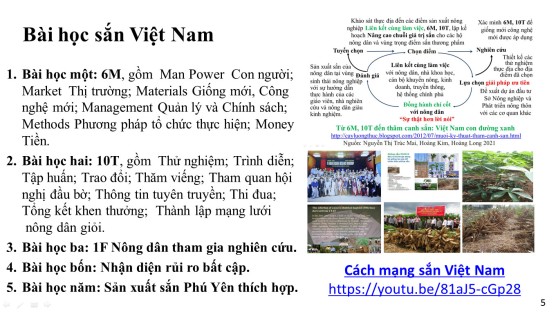


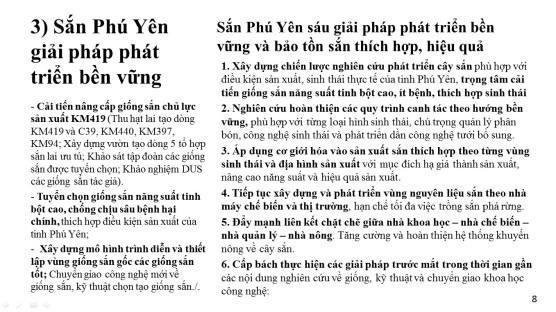


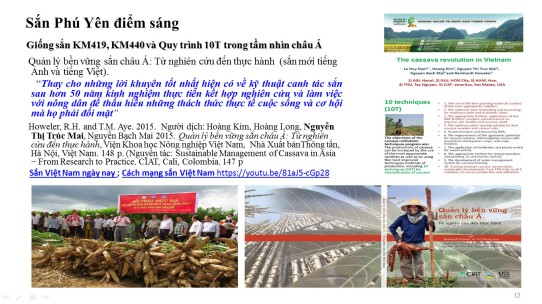
CÁC GIỐNG SẮN TỐT PHỔ BIẾN Ở VIỆT NAM
GIỐNG SẮN PHỔ BIẾN KM 419
Giống sắn KM419 là giống sắn chủ lực của Việt Nam có diện tích thu hoạch năm 2016 chiếm 38 % so với giống sắn KM94 chiếm 31,7% (RTB Newsletter 2016. Assessment reveals that most cassava grown in Vietnam has a CIAT pedigree), và từ năm 2019 giống sắn KM419 chiếm trên 42% tổng diện tích sắn toàn Việt Nam. Sau năm 2021, giống sắn KM419 dần được chuyển đổi bởi các giống sắn mới KM568, KM539, KM537, KM569, KM94* , HN1 kháng cao với bệnh khảm lá CMD và bệnh chổi rồng CWBD, có năng suất tinh bột cao và thích nghi sinh thái

Giống sắn KM 419 được chọn tạo từ tổ hợp lai BKA900 x KM 98-5. Giống do Trường Đại học Nông Lâm Thành phố Hồ Chí Minh phối hợp với Trường Đại học Nông Lâm Thái Nguyên, Sở Nông nghiệp và Phát triển Nông thôn Phú Yên, Trường Đại học Nông Lâm Huế tuyển chọn và giới thiệu (Hoàng Kim, Trần Ngọc Ngoạn, Nguyễn Thị Trúc Mai, Võ Văn Quang, Nguyễn Bạch Mai, Nguyễn Thị Lệ Dung, Nguyễn Phương, Hoàng Long, Nguyễn Minh Cường, Đào Trọng Tuấn, Trần Công Khanh, Nguyễn Minh Hiếu, Nguyễn Văn Bộ, Nguyễn Thị Cách, Nguyễn Trọng Hiển, Lê Huy Ham, H. Ceballos and M. Ishitani. (2016), Giống sắn KM419 đượcBộ Nông nghiệp và Phát triển Nông thôn công nhận sản xuất thử tại Quyết định số 85 / QĐ-BNN-TT Hà Nội ngày 13 tháng 1 năm 2016 cho vùng sinh thái Bắc Trung Bộ, Duyên hải Nam Trung Bộ, Tây Nguyên, Đông Nam Bộ).
Giống KM419 có đặc điểm:
+ Thân xanh xám thẳng, ngọn xanh cọng đỏ, lá xanh đậm, không phân nhánh.
+ Năng suất củ tươi: 34,9-54,9 tấn/ha.
+ Tỷ lệ chất khô: 35,1- 39.0%.
+ Hàm lượng tinh bột: 27,8 – 30,7%.
+ Năng suất tinh bột: 10,1-15,8 tấn/ ha
+ Chỉ số thu hoạch: 62 %.
+ Thời gian thu hoạch: 7-10 tháng.
+ Nhiễm trung bình bệnh chồi rồng và bệnh khảm lá virus CMD
+ Cây cao vừa, nhặt mắt, tán gọn, thích hợp trồng mật độ dày 12,500- 14.000 gốc/ ha .

Giống sắn KM419 đã phát triển rộng rãi tại Tây Ninh, Đồng Nai, Đắk Lắk, Phú Yên,…được nông dân các địa phương ưa chuộng với tên gọi sắn giống cao sản siêu bột Nông Lâm. Đặc biệt tại tỉnh Phú Yên giống sắn KM419 được trồng trên 85% tổng diện tích sắn của toàn tỉnh mang lại bội thu năng suất và hiệu quả cao về kinh tế xã hội. Tại Tây Ninh, năm 2019 diện tích sắn bị nhiễm bệnh CMD tuy vẫn còn cao nhưng mức độ hại giảm mạnh, lý do vì KM419 và KM94 là giống chủ lực chiếm trên 76% diện tích mỗi vụ của toàn tỉnh (KM419 chiếm 45% ở vụ Đông Xuân và 54,2% ở vụ Hè Thu; KM94 chiếm 31% ở vụ Đông Xuân và 21,6% ở vụ Hè Thu). Tại Đăk Lắk, từ năm 2019 diện tích sắn KM419 chiếm trên 70% diện tích mỗi vụ của toàn tỉnh.

GIỐNG SẮN PHỔ BIẾN KM 440
Đặc điểm giống: KM440 thân xanh, thẳng, nhặt mắt, không phân cành, lá già xanh đậm, đọt non màu xanh tím, củ đồng đều, dạng củ đẹp, thịt củ màu trắng, ít nhiễm sâu bệnh, năng suất củ tươi 40,5 đến 53,1 tấn/ha. Hàm lượng bột đạt từ 27,0 -28,9%,. giống ngắn ngày, thời gian giữ bột sớm hơn KM94.
GIỐNG SẮN PHỔ BIẾN KM 440, KM419



GIỐNG SẮN PHỔ BIẾN KM 94
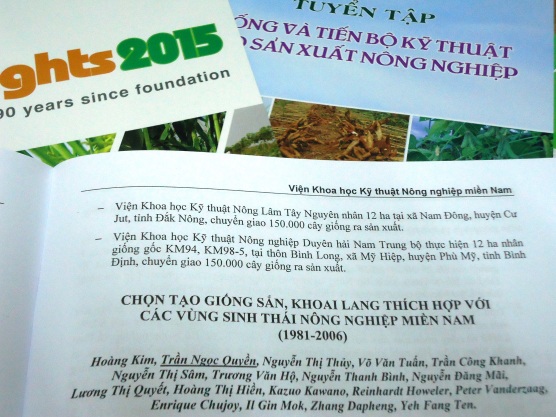
Nguồn gốc Giống sắn KM94 hoặc KU50 (hoặc Kasetsart 50) được nhập nội từ CIAT/Thái Lan trong bộ giống khảo nghiệm Liên Á năm 1990. Giống do Viện Khoa học Kỹ thuật Nông nghiệp miền Nam, Viện Khoa học Nông nghiệp Việt Nam, Trường Đại học Nông Lâm Thái Nguyên nhập nội, tuyển chọn và giới thiệu (Trần Ngọc Quyền, Hoàng Kim, Võ Văn Tuấn, Kazuo Kawano 1995, Trịnh Phương Loan, Trần Ngọc Ngoạn và ctv. 1995). Giống được Bộ Nông nghiệp và PTNT công nhận giống quốc gia năm 1995 trên toàn quốc tại Quyết định số 97/NN-QLCN/QĐ ngày 25/11/1995. Giống sắn KM94 là giống sắn chủ lực của Việt Nam có diện tích thu hoạch năm 2008 chiếm 75, 54% (Hoang Kim Nguyen Van Bo et al. 2010), năm 2016 chiếm 31,7 % và năm 2019 chiếm khoảng 37% tổng diện tích sắn toàn Việt Nam

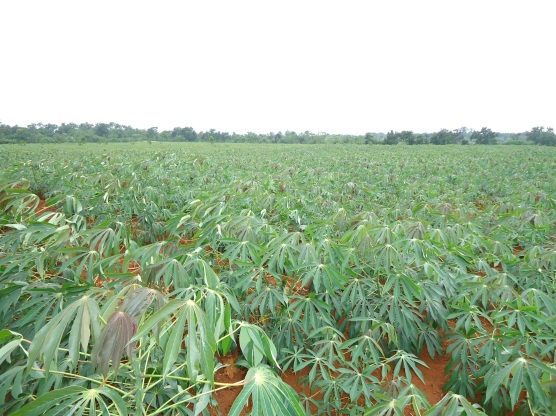
Đặc điểm giống: Giống KM94 có đặc điểm
+ Thân xanh xám, ngọn tím, không phân nhánh.
+ Năng suất củ tươi: 33,0 tấn/ha.
+ Tỷ lệ chất khô: 35,1- 39.0%.
+ Hàm lượng tinh bột: 28,7%.
+ Năng suất tinh bột: 7,6-9,5 tấn/ ha
+ Chỉ số thu hoạch: 58 %.
+ Thời gian thu hoạch: 9-11 tháng.
+ Nhiễm trung bình bệnh chồi rồng, bệnh khảm lá sắn CMD và bệnh cháy lá
+ Cây cao, cong ở phần gốc, thích hợp trồng mật độ 10.000-11 000 gốc/ ha .
GIỐNG SẮN PHỔ BIẾN KM 140
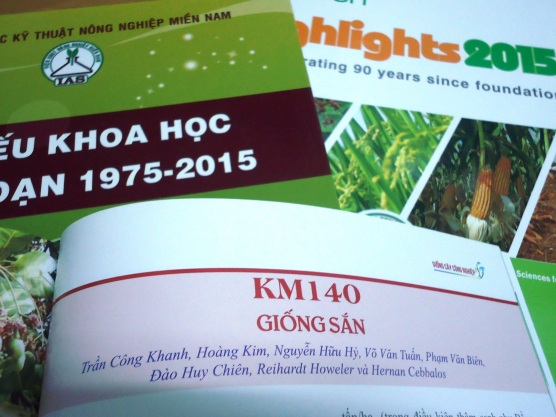
Nguồn gốc::Giống sắn KM140 là con lai của tổ hợp KM 98-1 x KM 36 do Viện Khoa học Kỹ thuật Nông nghiệp miền Nam tuyển chọn và giới thiệu (Trần Công Khanh, Hoàng Kim, Võ Văn Tuấn, Nguyễn Hữu Hỷ, Phạm Văn Biên, Đào Huy Chiên, Reinhardt Howeler và Hernan Ceballos 2007, 2009). Giống KM140 được Bộ Nông nghiệp & PTNT, cho phép sản xuất thử trên toàn quốc (Quyết định số 3468/ QĐ- BNN- TT, ngày 05/ 11/ 2007) và công nhận chính thức tại Quyết định số 358 ngày 20 tháng 09 năm 2010 và cho phép sản xuất hàng hoá trên toàn Quốc theo Thông tư số 65. 65/2010/TT-BNNPTNT, ngày 05 tháng 11 năm 2010 của Bộ trưởng Bộ Nông nghiệp và Phát triển Nông thôn. 0714-10-10-00.và đoạt giải Nhất Hội thi sáng tạo kỹ thuật toàn quốc VIFOTECH năm 2010. Giống KM140 được trồng nhiều tại các tỉnh phía Nam với diện tích thu hoạch năm 2008 trên 30.000 ha, năm 2010 trồng trên 150.000 ha; hiện là giống phổ biến.
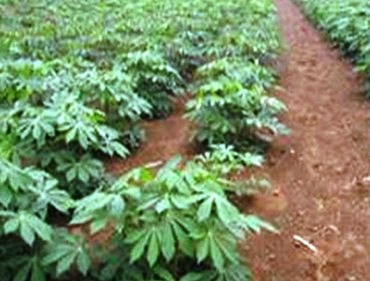

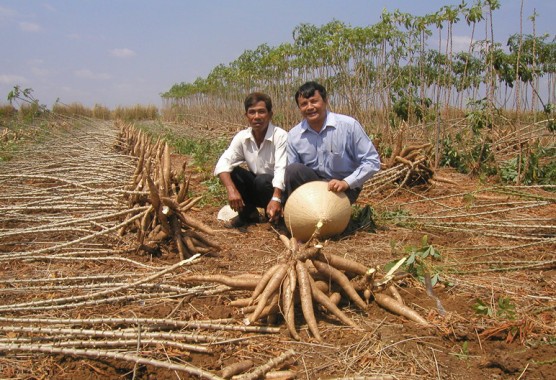
Đặc điểm giống:
+ Thân xanh, thẳng, ngọn xanh, cây cao vừa phải, không phân nhánh.
+ Năng suất củ tươi: 33,4 – 35,0 tấn/ha.
+ Tỷ lệ chất khô: 34,8 – 40,2%.
+ Hàm lượng tinh bột: 26,1- 28,7%.
+ Năng suất bột : 9,5 -10,0 tấn/ha
+ Chỉ số thu hoạch: 58 -65 %.
+ Thời gian thu hoạch: 8-10 tháng.
+ Nhiễm nhẹ bệnh cháy lá.
+ Thời gian giữ bột ngắn hơn KM94

Chọn giống sắn Việt Nam; Giống sắn KM140 giải VIFOTEC http://news.gov.vn/Home/VIFOTEC-2009-boasts-for-high-applicability/20101/6051.vgp


GIỐNG SẮN PHỔ BIẾN KM 98-5
Nguồn gốc:
Giống sắn KM98-5 là con lai của tổ hợp KM 98-1 x Rayong 90 do Viện Khoa
học Kỹ thuật Nông nghiệp miền Nam tuyển chọn và giới thiệu (Trần Công
Khanh, Hoàng Kim, Võ Văn Tuấn, Nguyễn Hữu Hỷ, Phạm Văn Biên, Đào Huy
Chiên, Reinhardt Howeler và Hernan Ceballos 2006, 2009). Giống được UBND
tỉnh Tây Ninh và UBND tỉnh Đồng Nai công nhận kết quả đề tài ứng dụng
KHKT cấp Tỉnh năm 2006. Bộ Nông nghiệp và PTNT công nhận giống năm 2009
cho các vùng Đông Nam Bộ, Duyên hải miền Trung và Tây Nguyên tại Quyết
định số 358 ngày 20 tháng 09 năm 2010 Giống KM98-5 được trồng tại các
tỉnh phía Nam với diện tích thu hoạch năm 2008 trên 25.000 ha, năm 2010
trồng trên 100.000 ha; hiện là giống phổ biến..
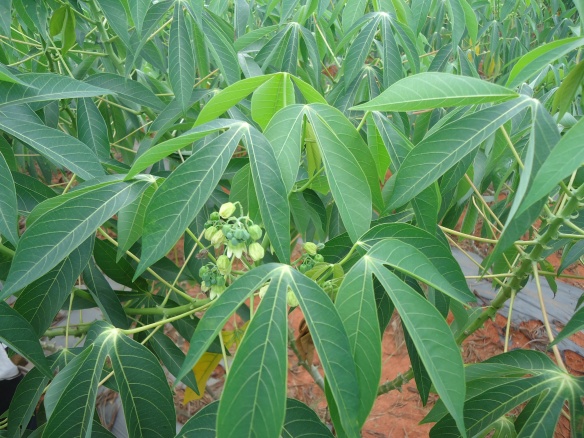
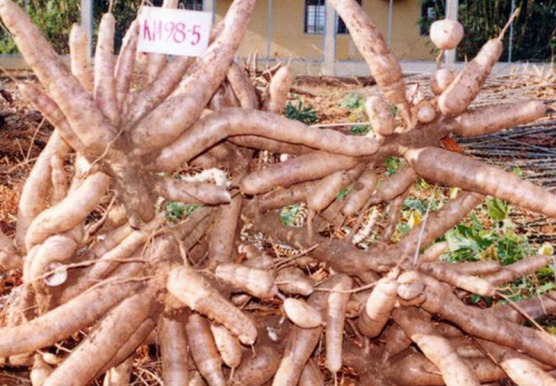
Đặc điểm giống:
+ Thân xanh, hơi cong ở gốc, ngọn xanh, ít phân nhánh.
+ Giống sắn KM98-5 có cây cao hơn và dạng lá dài hơn so với KM419
+ Năng suất củ tươi: 34,5 tấn/ha.
+ Tỷ lệ chất khô: 39,2%.
+ Hàm lượng tinh bột: 28,5%.
+ Năng suất bột : 9,8 tấn/ha
+ Chỉ số thu hoạch: 63 %.
+ Thời gian thu hoạch: 8-10 tháng.
+ Thời gian giữ bột tương đương KM94
+ Nhiễm nhẹ bệnh cháy lá.
GIỐNG SẮN PHỔ BIẾN KM98-1
Nguồn gốc: KM98-1 là con lai Rayong 1x Rayong 5 (= giống sắn KU 72 của Thái Lan hình trên, nhưng việc lựa chọn giống bố mẹ, lai tạo và chọn dòng thực hiện hoàn toàn tại Việt Nam) do Viện Khoa học Kỹ thuật Nông nghiệp miền Nam tuyển chọn và giới thiệu (Hoàng Kim, Kazuo Kawano, Trần Hồng Uy, Trần Ngọc Quyền, Võ Văn Tuấn, Trần Công Khanh, 1999). Giống KM98-1 được Bộ Nông nghiệp và PTNT công nhận giống năm 1999 cho các vùng Đông Nam Bộ, Duyên hải miền Trung và Tây Nguyên (MARD Certificate No. 3493/QD-BNN–KHKT, Sep 9, 1999). Giống KM98-1 được trồng phổ biến tại các tỉnh Tây Ninh, Đồng Nai, Nghệ An, Thừa Thiên Huế…. với diện tích thu hoạch năm 2008 trên 18.000 ha, năm 2010 trồng trên 20.000 ha, hiện là giống phổ biến..


Đặc điểm giống:
+ Thân xanh, tai lá rõ, lá xanh, cọng tím
+ Năng suất củ tươi: 32,5 – 40,0 tấn/ha.
+ Tỷ lệ chất khô: 35,8%.
+ Hàm lượng tinh bột: 27,2- 28,3 %.
+ Năng suất bột : 8,9 tấn/ha
+ Chỉ số thu hoạch: 66 %.
+ Thời gian thu hoạch: 8-10 tháng.
+ Nhiễm nhẹ bệnh cháy lá.
+ Bảo quản giống ngắn hơn KM94
GIỐNG SẮN PHỔ BIẾN SM 937-26
Nguồn gốc:: Tên gốc SM937 của CIAT/Clombia được nhập nội bằng hạt từ CIAT/Thái Lan năm 1990. Giống do Viện Khoa học Kỹ thuật Nông nghiệp miền Nam tuyển chọn và giới thiệu (Trần Ngọc Quyền, Hoàng Kim, Võ Văn Tuấn, Kazuo Kawano 1995). Giống SM937-26 được Bộ Nông nghiệp và PTNT công nhận tạm thời năm 1995 cho các vùng Đông Nam Bộ, Duyên hải miền Trung và Tây Nguyên tại Quyết định số 98/NN-QLCN/QĐ ngày 25/11/1995.. Giống SM937-26 được trồng nhiều tại các tỉnh Bình Định, Quảng Ngãi với diện tích thu hoạch năm 2008 trên 15.000 ha, năm 2010 trồng trên 20.000 ha, hiện là giống phổ biến.


Đặc điểm giống:
+ Thân nâu đỏ, thẳng, không phân nhánh
+ Năng suất củ tươi: 32,5 tấn/ha.
+ Tỷ lệ chất khô: 37,9%.
+ Hàm lượng tinh bột: 28,9%.
+ Năng suất bột : 9,4 tấn/ha
+ Chỉ số thu hoạch: 61 %.
+ Thời gian thu hoạch: 8-10 tháng.
+ Nhiễm nhẹ bệnh cháy lá.
+ Vỏ củ dày và cứng hơn KM940; Hoang & ctv., 2014).


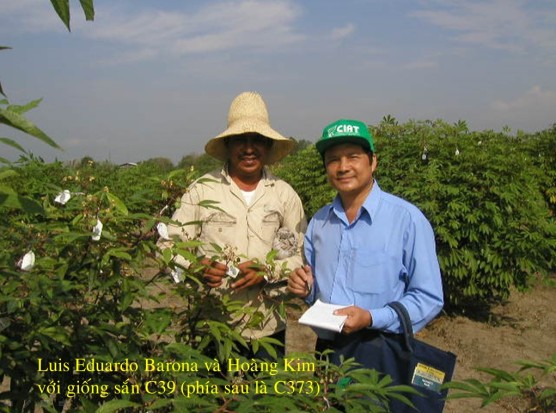
Giải pháp chọn giống sắn Việt Nam tiếp nối hiệu quả là sử dụng giống sắn KM419 năng suất tinh bột cao sạch bệnh tiếp tục lai tạo với các giống sắn kháng bệnh CMD đã có. Bài viết CHỌN GIỐNG SẮN VIỆT NAM đúc kết tóm tắt thông tin đã có và định hướng cho sự nổ lực Trúc Mai, Hoang Long, BM Nguyễn, Nguyen Van Nam, Nhan Pham, Hung Nguyenviet, Hoàng Kim, Jonathan Newby … đang lai hữu tính và bồi dục nâng cao tính kháng cho các giống sắn KM419, KM440, KM397, tốt nhất hiện nay
Chọn giống sắn kháng CMD
Chọn giống sắn kháng CWBD
Chọn giống sắn Việt Nam
Sắn Việt Nam và Howeler
Sắn Việt Nam và Kawano
Giống sắn KM419 và KM440,
nền tảng bảo tồn và phát triển
Kết
quả nâng cấp cải tiến giống sắn chủ lực thương mại KM419, KM440 bằng
cách hồi giao với KM539, KM537, KM534, KM94 thuộc nhiệm vụ khoa học thực
tiễn cấp bách: ”Nghiên cứu chọn tạo giống sắn năng suất tinh bột cao,
kháng được sâu bệnh hại chính, phù hợp với điều kiện sản xuất tại tỉnh
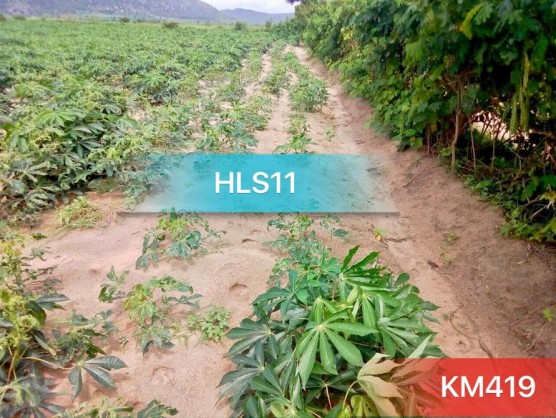
Phú Yên. Giống sắn KM568 trên ruông nông dân Phú Yên (giữa) rất sạch
bệnh khảm lá virus (CMD) và bệnh chồi rồng CWBD, bên trái phía sau là
giống sắn chủ lực sản xuất KM419 cũ nhiều và đồng đều nhưng nhiễm bệnh
CMD mức 3,5; bên phải phía sau là giống chủ lực thương mại KM440 kháng
bệnh CMD cấp 2, CWBD cấp 1,5. Giống sắn KM568, KM440 năng suất tinh bột
cao, kháng được sâu bệnh hại chính, phù hợp với điều kiện sản xuất của
tỉnh Phú Yên; xem tiếp Bảo tồn và phát triển sắn https://hoangkimlong.wordpress.com/category/bao-ton-va-phat-trien-san/
GIỐNG SẮN KM419 VÀ KM440
Nguyễn Thị Trúc Mai, Hoàng Kim, Hoàng Long và cộng sự.
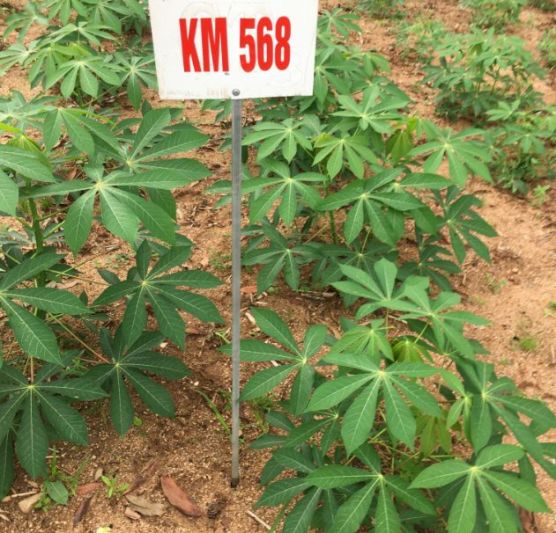
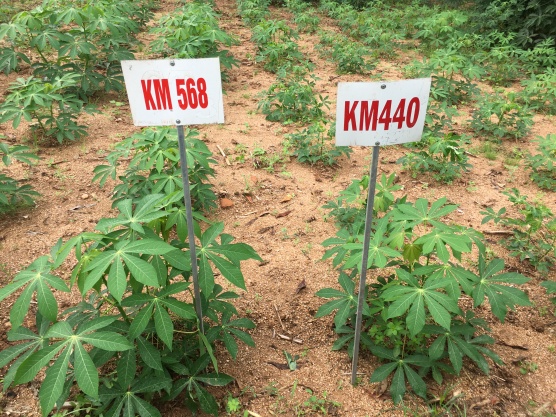
Thông tin tiến bộ mới Bảo tồn và phát triển sắn; Sự thật tốt hơn ngàn lời nói Chọn giống sắn kháng CMD; Chọn giống sắn Việt Nam Giống sắn KM419 và KM440 xem tiếp https://hoangkimlong.wordpress.com/category/giong-san-km419-va-km440/
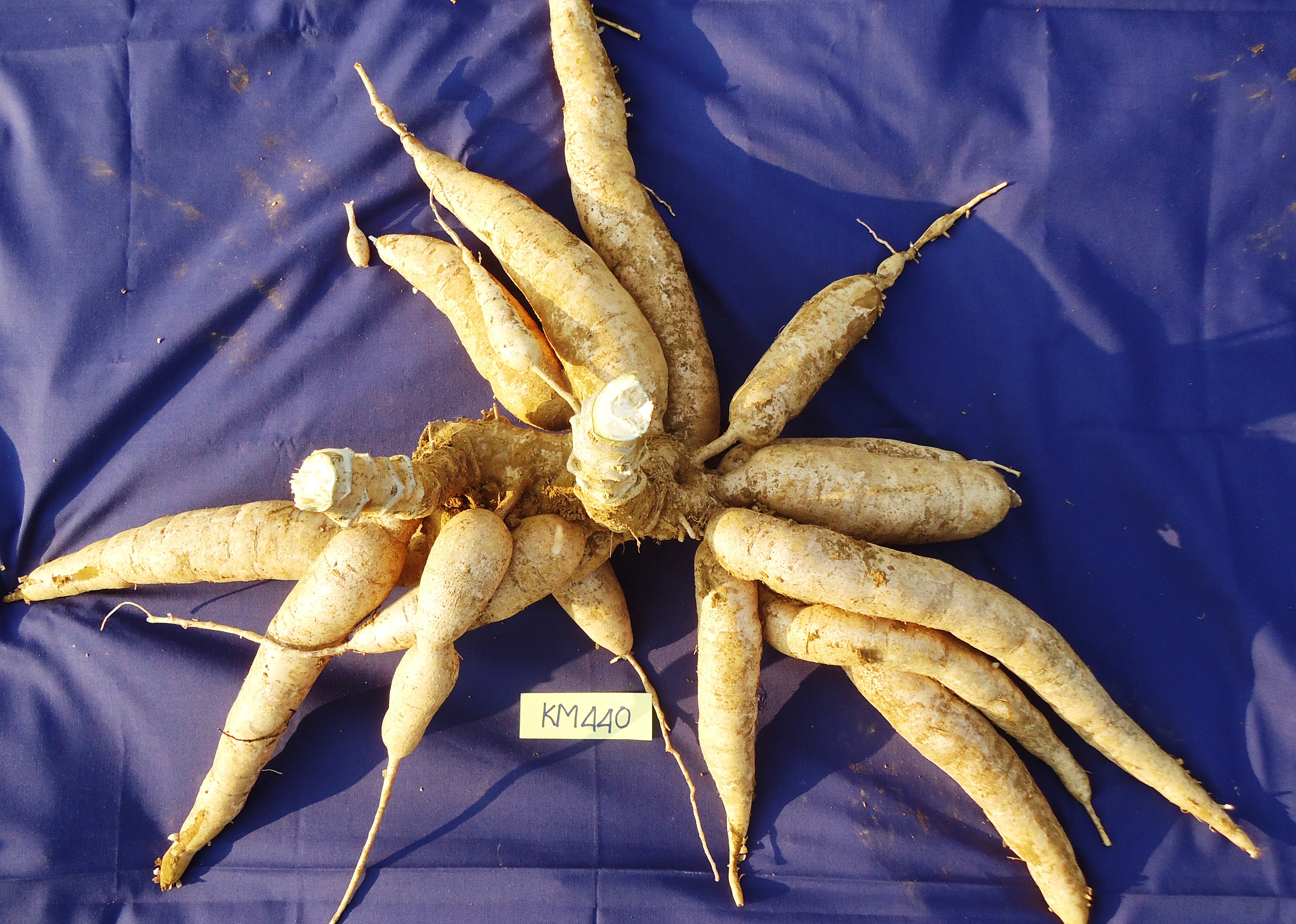
GIỐNG SẮN KM440 TAI XANH, SIÊU BỘT, ÍT BỆNH
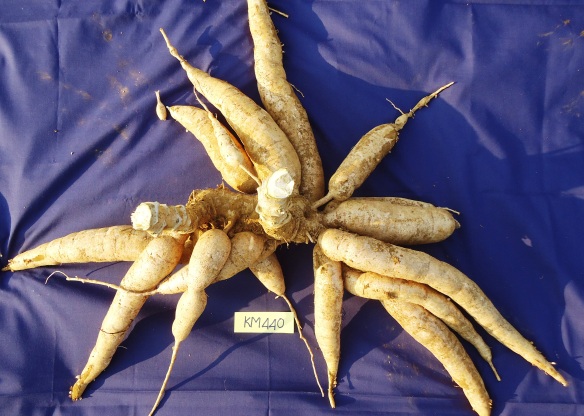
Đặc điểm giống: KM440 thân xanh, thẳng, nhặt mắt, không phân cành, lá già xanh đậm, đọt non màu xanh tím, củ đồng đều, dạng củ đẹp, thịt củ màu trắng, ít nhiễm sâu bệnh, năng suất củ tươi 40,5 đến 53,1 tấn/ha. Hàm lượng bột đạt từ 27,0 -28,9%,. giống ngắn ngày, thời gian giữ bột sớm hơn KM94.
Giống sắn KM440 và KM419 đến thời điểm này (ngày 7 tháng 12 năm 2022) vẫn tiếp tục chiếm diện tích lớn áp đảo, đặc biệt là giống sắn KM 440 “tai xanh” ít bệnh hơn KM419 ‘tai đỏ” có ưu thế vượt trội trên quy mô trồng rộng và tiêu thụ sắn tại Việt Nam, bất chấp áp lực nặng của bệnh CMD và CWBD; Giống sắn KM440 (đột biến từ KM94) được nhiều hộ nông dân ưa thích và tự nhân giống. “Kẻ sống sót không phải là kẻ mạnh nhất hay thông minh nhất, mà là kẻ thích nghi tốt nhất” Charles Darwin đã nói vậy: “It is not the strongest of the species that survives, nor the most intelligent that survives. It is the one that is most adaptable to change” Bảo tồn và phát triển bền vững, thích nghi để tồn tại là câu chuyện sắn hôm nay KM568, KM440, KM419, KM539, KM569 (giống sắn vàng Phú Yên) , KM534 (nâng cấp cải tiến KM397 phát triển từ SM937-26) https://hoangkimlong.wordpress.com/category/giong-san-KM419-va-KM440/

Bài tổng hợp tóm tắt này kèm theo sáu video sắn liên quan: 1) Giống sắn KM440 Phú Yên, rất ít nhiễm bệnh CMD, Video https://youtu.be/oXEF0RpZIo8 ngày 17 6 2022 tại xã Hòa Thịnh, huyện Tây Hòa, tỉnh Phú Yên 2) Thu hoạch sắn ở Phú Yên Video Cassava varieties KM419 and KM440 https://youtu.be/XDM6i8vLHcI.; 3) Thu hoạch giống sắn KM440 ở tỉnh Tây Ninh https://youtu.be/kjWwyW0hkbU 4) Tây Ninh hướng tới thâm canh sắn bền vững (Cassava in Vietnam: Save and Grow) https://youtu.be/XMHEa-KewEk; 5) Phú Yên nôi lúa sắn trích Video https://youtu.be/CKdEr4aS2NA Thông tin Sở Khoa học và Công nghệ Phú Yên, Hội nghị tổng kết hoạt động khoa học và công nghệ Phú Yên giai đoạn 2016-2020; Định hướng phát triển, ứng dụng khoa học, công nghệ và đổi mới sáng tạo giai đoạn 2021-2025 6) Video https://youtu.be/81aJ5-cGp28 Cách mạng sắn Việt Nam (The cassava revolution in Vietnam);
GIỐNG SẮN CHỦ LỰC KM419
Giống sắn KM 419 được
chọn tạo từ tổ hợp lai BKA900 x KM 98-5. Giống do Trường Đại học Nông
Lâm Thành phố Hồ Chí Minh phối hợp với Trường Đại học Nông Lâm Thái
Nguyên, Sở Nông nghiệp và Phát triển Nông thôn Phú Yên, Trường Đại học
Nông Lâm Huế tuyển chọn và giới thiệu (Hoàng Kim, Trần Ngọc Ngoạn,
Nguyễn Thị Trúc Mai, Võ Văn Quang, Nguyễn Bạch Mai, Nguyễn Thị Lệ Dung,
Nguyễn Phương, Hoàng Long, Nguyễn Minh Cường, Đào Trọng Tuấn, Trần Công
Khanh, Nguyễn Minh Hiếu, Nguyễn Văn Bộ, Nguyễn Thị Cách, Nguyễn Trọng
Hiển, Lê Huy Ham, H. Ceballos and M. Ishitani. (2016), Giống sắn KM419
đượcBộ Nông nghiệp và Phát triển Nông thôn công nhận sản xuất thử tại
Quyết định số 85 / QĐ-BNN-TT Hà Nội ngày 13 tháng 1 năm 2016 cho vùng
sinh thái Bắc Trung Bộ, Duyên hải Nam Trung Bộ, Tây Nguyên, Đông Nam
Bộ).

Giống sắn KM419 là giống sắn chủ lực của Việt Nam có diện tích thu hoạch năm 2016 chiếm 38 % so với giống sắn KM94 chiếm 31,7% (RTB Newsletter 2016. Assessment reveals that most cassava grown in Vietnam has a CIAT pedigree), và từ năm 2019 giống sắn KM419 chiếm trên 42% tổng diện tích sắn toàn Việt Nam.

Giống KM419 có đặc điểm:
+ Thân xanh xám thẳng, ngọn xanh cọng đỏ, lá xanh đậm, không phân nhánh.
+ Năng suất củ tươi: 34,9-54,9 tấn/ha.
+ Tỷ lệ chất khô: 35,1- 39.0%.
+ Hàm lượng tinh bột: 27,8 – 30,7%.
+ Năng suất tinh bột: 10,1-15,8 tấn/ ha
+ Chỉ số thu hoạch: 62 %.
+ Thời gian thu hoạch: 7-10 tháng.
+ Nhiễm trung bình bệnh chồi rồng và bệnh khảm lá virus CMD
+ Cây cao vừa, nhặt mắt, tán gọn, thích hợp trồng mật độ dày 12,500- 14.000 gốc/ ha .

Giống sắn KM419 đã phát triển rộng rãi tại Tây Ninh, Đồng Nai, Đắk Lắk, Phú Yên,…được nông dân các địa phương ưa chuộng với tên gọi sắn giống cao sản siêu bột Nông Lâm. Đặc biệt tại tỉnh Phú Yên giống sắn KM419 được trồng trên 85% tổng diện tích sắn của toàn tỉnh mang lại bội thu năng suất và hiệu quả cao về kinh tế xã hội. Tại Tây Ninh, năm 2019 diện tích sắn bị nhiễm bệnh CMD tuy vẫn còn cao nhưng mức độ hại giảm mạnh, lý do vì KM419 và KM94 là giống chủ lực chiếm trên 76% diện tích mỗi vụ của toàn tỉnh (KM419 chiếm 45% ở vụ Đông Xuân và 54,2% ở vụ Hè Thu; KM94 chiếm 31% ở vụ Đông Xuân và 21,6% ở vụ Hè Thu). Tại Đăk Lắk, năm 2019 diện tích sắn KM419 chiếm trên 70% diện tích mỗi vụ của toàn tỉnh

Giống sắn KM94 tên gốc là KU50 nhập nội từ Thái Lan là giống sắn chủ lực phổ biến ở Thái Lan và Việt Nam. (xem Chọn giống sắn ở Việt Nam https://hoangkimlong.wordpress.com/category/chon-giong-san-viet-nam/. Từ năm 2009, khi dịch bệnh chồi rồng CWBD bùng phát đầu tiên ở Quảng Ngãi giống KM94 nhiễm nặng thì giống sắn KM94 cao cây đã nhanh chóng chuyển đổi. Các giống sắn KM419 (siêu bột Nông Lâm tai đỏ) và giống sắn KM440 (đột biến từ KM94, siêu bột Nông Lâm tai xanh) đã trở thành giống sắn chủ lực thương mại ở Tây Ninh, Phú Yên với nhiều tỉnh ở Việt Nam thay thế KM94. Lý do vì: Giống sắn KM419 và KM440 cây thấp gọn, dễ trồng dày, thân xanh thẳng, nhặt mắt, không phân cành, lá già xanh đậm, đọt non màu xanh, cọng xanh tím (tai đỏ KM419) hoặc xanh tím nhạt (tai xanh KM440), số củ 8-12, củ to và đồng đều, dạng củ đẹp, thịt củ màu trắng, chịu hạn tốt, năng suất siêu bột, thời gian sinh trưởng sớm kháng sâu bênh hại chính, thích nghi rộng. xem tiếp https://hoangkimlong.wordpress.com/category/tien-bo-giong-san-viet-nam
Keywords: Vietnam cassava today, Tiến bộ giống sắn Việt Nam
(*)
Thông tin trích dẫn tại slide 10 trong bài SẮN PHÚ YÊN GIẢI PHÁP PHÁT
TRIỂN BỀN VỮNG TS. Nguyễn Thị Trúc Mai, TS. Hoàng Kim, TS. Hoàng Long;
Báo cáo Phú Yên 28 12 2021 Hội nghị “Giới thiệu về các công nghệ trong
sản xuất Nông Lâm Thủy sản”, tài liệu hội nghị và bài tham luận tại Phú
Yên 31 12 2021 “Hội nghị Tổng kết hoạt động khoa học và công nghệ giai
đoạn 2016- 2020, định hướng phát triển ứng dụng KHCN & ĐMST giai
đoạn 2021-2025” UBND Tỉnh Phú Yên, (và cập nhật thêm tiến bộ mới 2022) xem tiếp Phú Yên nôi lúa sắn https://hoangkimlong.wordpress.com/category/phu-yen-noi-lua-san/ và Bảo tồn và phát triển sắn https://hoangkimlong.wordpress.com/category/bao-ton-va-phat-trien-san/ :

PHÚ YÊN NÔI LÚA SẮN
Hoàng Kim
Thông tin Sở Khoa học và Công nghệ Phú Yên,
Hội nghị tổng kết hoạt động khoa học và công nghệ Phú Yên giai đoạn
2016-2020; Định hướng phát triển, ứng dụng khoa học, công nghệ và đổi
mới sáng tạo giai đoạn 2021-2025. Sáng ngày 31/12/2021, tại TP Tuy Hòa,
UBND tỉnh Phú Yên đã phối hợp với Sở KH&CN tổ chức hội nghị tổng kết
hoạt động khoa học và công nghệ Phú Yên giai đoạn 2016-2020; Định hướng
phát triển, ứng dụng khoa học, công nghệ và đổi mới sáng tạo giai đoạn
2021-2025. Hội nghị được tổ chức trực tiếp tại TP Tuy Hòa và kết nối
trực tuyến đến các thị xã, huyện trong địa phương cùng đại diện Bộ
KH&CN. Chủ trì Hội nghị là đồng chí Đào Mỹ, Phó Chủ Tịch UBND tỉnh
Phú Yên và đồng chí Dương Bình Phú, Giám đốc Sở KH&CN, tham dự Hội
nghị còn có ông Thân Ngọc Hoàng, Phó Vụ trưởng Vụ Phát triển Khoa học và
Công nghệ địa phương và đại diện lãnh đạo các Sở, Ban, Ngành, đơn vị,
doanh nghiệp trong tỉnh; xem tiếp https://khcnpy.gov.vn/hoi-nghi-tong-ket-hoat-dong-khoa-hoc-va-cong-nghe-phu-yen-giai-doan-2016-2020-dinh-huong-phat-trien-ung-dung-khoa-hoc-cong-nghe-va-doi-moi-sang-tao-giai-doan-2021-2025/
Phú Yên nôi lúa sắn https://youtu.be/CKdEr4aS2NA
là lời biết ơn chân thành bởi Hoàng Kim và đs. 2021. Hoàng Kim tham dự
hội nghị theo giấy mời của UBND Tỉnh Phú Yên. Chúng tôi lưu trích đoạn
lúa sắn thuộc lĩnh vực kỹ thuật công nghệ trong phim của Đài Phát thanh
và Truyền hình Phú Yên với Sở Khoa học và Công nghệ phối hợp thực hiện
tháng 12 năm 2021. Phim chiếu tại Hội nghị tổng kết hoạt động khoa học
công nghệ giai đoạn 2016-2020, định hướng phát triển ứng dụng KHCN &
ĐMST giai đoạn 2021-2025 https://youtu.be/CKdEr4aS2N
https://hoangkimlong.wordpress.com/category/bao-ton-va-phat-trien-san/

